
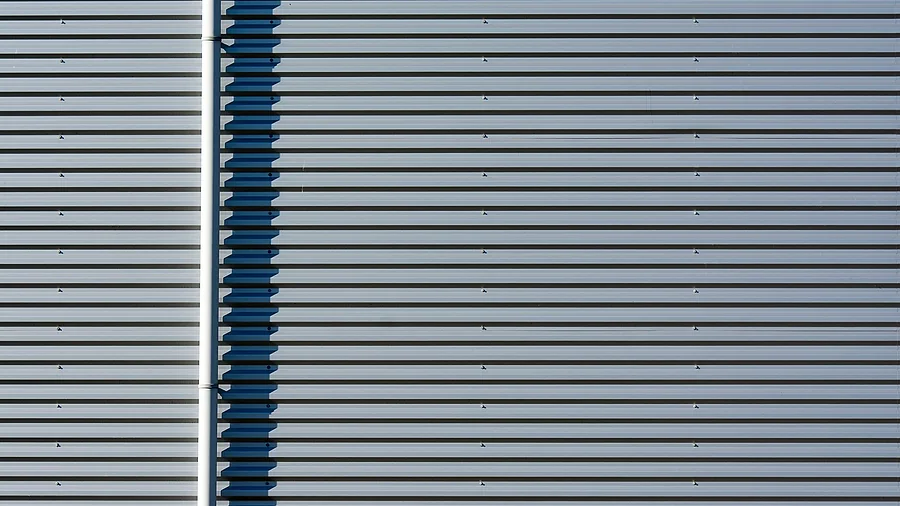
What we most often see on buildings somebody else cleaned is not soiling. It is damage. The difference is that soiling washes off and damage gets replaced.
Why cladding specifically
A composite panel is not bare metal. It carries a very thin coated finish that gives it its colour and its sheen and protects it. Glass tolerates products and abrasion that this coating does not, and treating the two the same way is the first and most common mistake.
The mistakes that keep repeating
- A strongly alkaline or acidic product. It takes the soiling off and the sheen with it, leaving dull patches that do not come back.
- Too much water pressure. It drives water behind the panels and into the joints, and leaves tracks across the coating.
- Abrasive tools. A coarse pad or a blade leaves fine scratches that later collect dirt, so the elevation soils faster after every wash.
- Washing in direct sun. The product dries before it is rinsed and leaves its own mark on the surface.
How to spot it from the street
Damage on cladding has a recognisable shape: pale vertical tracks following where water ran, or lighter rectangles following panel edges. Natural soiling is gradual and uneven. If you can see a regular geometric pattern, it is usually a cleaning mark rather than dust.
What to ask before signing
Ask any contractor about the surface before they give you a price. Anyone who starts from the schedule and the number without asking what the elevation is made of will use on your building whatever they used on the last one. And ask for a test patch on a small, unseen area before any product goes across the whole facade.