
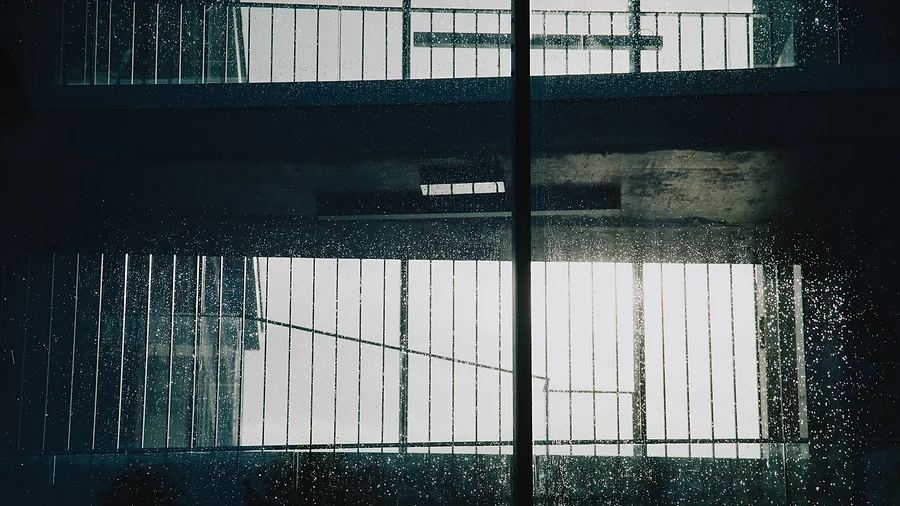
A question that keeps coming back: we cleaned the elevation and there are still white patches or dull streaks. The answer is that what you are looking at is not on the glass. It is in it.
What is actually happening
Water that dries on glass leaves behind whatever was dissolved in it: calcium, magnesium and other salts. The first deposit comes off easily. But with heat and repetition those minerals begin reacting with the glass surface itself and etch microscopic pits into it. At that point no cleaner removes them, because there is nothing sitting on top of the surface to remove.
Where the water comes from
- Irrigation sprinklers aimed at the elevation. The most common cause, and the most fixable.
- Air conditioning dripping onto the glass below it.
- Run-off from ledges or upper roofs.
- A previous wash left to dry in the sun without rinsing.
Why sun accelerates all of it
Washing in direct sun dries the water before it is rinsed, leaving everything that was in it on the surface. That is why early or night work is better technically, not just for disruption.
What can be done
Recent deposits come off with products made for glass. Deep etching needs a different treatment of the glass surface, which is a separate process from cleaning and gets assessed on its own. What matters most is stopping the water source first, or the marks return within weeks.