
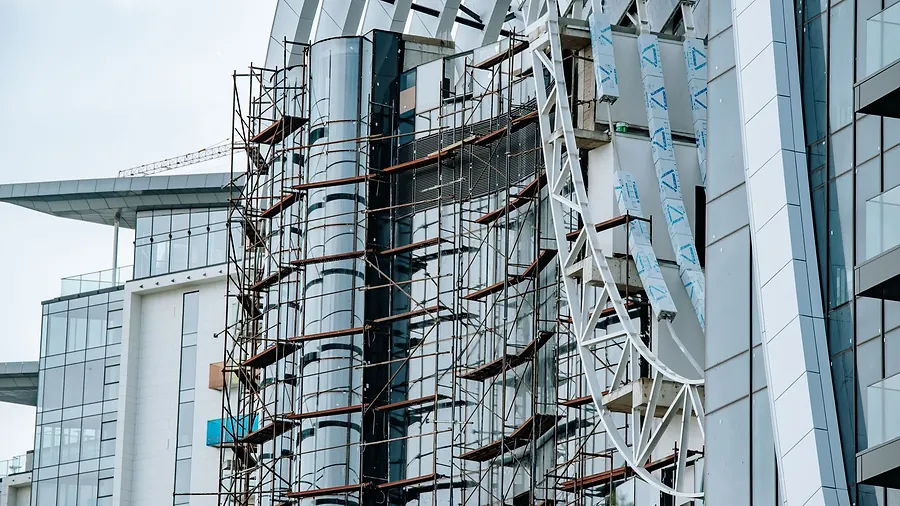
A post-construction clean is not an early routine clean. What gets left on an elevation after building work is different in kind, and some of it becomes permanent within weeks.
What stays on the elevation
- Cement and plaster splatter. Alkaline, and it etches glass if it sits there with any humidity.
- Silicone and adhesive residue. Needs careful mechanical removal rather than strong solvents.
- Protective tape and its residue. In sun it degrades and bonds harder the longer it is left.
- Factory labels on glass. Their adhesive hardens with time.
- Paint overspray and metal filings. Filings in particular rust on glass and leave brown pinpoints that do not wash off.
Why timing is critical
Most of this comes off easily in the first few weeks and turns into a different problem afterwards. Deferring the handover clean until after the building is occupied converts simple work into surface remediation.
How the execution differs
It is slower than routine cleaning because it is far more manual: each deposit is treated on its own, and a test patch precedes any product. Anyone pricing it at routine-clean rates has either not seen the elevation or is planning only to wash it.
Who carries it
It is usually defined in the main contractor's agreement, and it is a clause that gets overlooked often enough that it lands with building management after handover. Worth asking about before handover rather than after.