
This is what a building manager gets asked internally before anyone asks about price, and it is also the question that sorts contractors out: anyone who answers with one method for every building is selling you what they own rather than what your building needs.
Rope access
A technician suspended on two lines: a working rope and an independent backup. It needs no ground space, closes no entrance, and reaches what no machine can: curved elevations, tapering towers, narrow gaps between buildings, and glass canopies with nothing beneath them to stand on.
Above a certain height it is not one option of two. It is the only one, because a lift has a reach and the reach ends.
Truck-mounted boom lifts
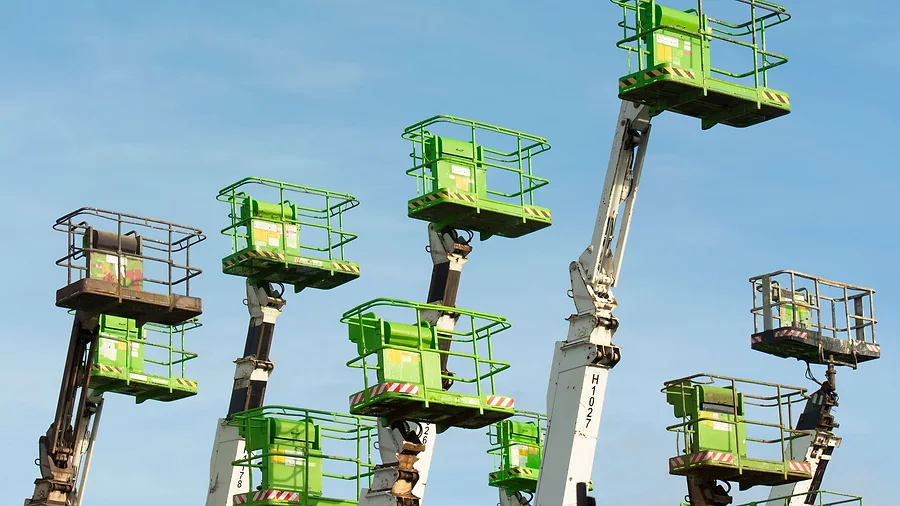
A basket on an arm, mounted on a truck. Clearly faster wherever the ground takes the truck with its outriggers out. It covers more area in less time and suits raking elevations that are awkward to descend on rope.
The price is ground space: a row of parking cleared, a route for the truck, and ground that carries the load. In a city centre those are not small details.
What actually decides it
- Height. Past the lift's reach, it is rope.
- The ground below. No space, no lift.
- The shape of the elevation. Curved, tapering and recessed suit rope.
- How the building is used. Anything that cannot lose an entrance during the day goes to rope, or to nights.
- Anchor points. Whether they exist and are sound is checked on the roof during the survey, before any of this is decided.
The practical answer
One building often uses both: a lift on the wide elevation with parking in front of it, rope on the tight rear elevation and on the canopy. A survey should produce a plan that says which method on which face and why, not one method imposed on the whole building.