Raghwat Al Janoub Maintenance and Cleaning
Building facade cleaning in Hail
Hail sits in a valley between two granite mountain ranges, blending old stone quarters near a historic hilltop fort and an ancient covered souk with newer apartment blocks, villas and a university campus. Prevailing winds lift fine red sand from the Great Nafud to the north that tints pale render and gathers on glass, and rain on this dust leaves rust coloured streaks that mark stone permanently.
Why a facade needs regular cleaning
-

The surface is protected
The wrong product costs more than the dirt it removes.
-

Access decided on site
We do not pick the access method from an office.
-

Glass stays clear
Calcium scale on glass turns into permanent etching if it is left.
-

The building keeps running
We plan the access and the working hours around how the building is used through the day, and we protect the ground, the entrances and anyone passing below.
Why the job is different in Hail
Old mud quarters in the valley bottom hold moisture for weeks after rain, whilst modern villas and blocks on the valley rim face red sand storms daily. The whole method is set out in our full account of building facade cleaning.
-
Fine red sand tints pale render and clogs glass and ledges
The Great Nafud sends very fine red sand that tints white and grey render to a brownish red hue. Sand gathers in window frames and openings and penetrates cracks. Glass loses clarity under fine sand film, and normal water washing may not lift all residue from cracks and joints. The grit is so fine it travels far on wind and settles on everything exposed.
-
Rain on red sand leaves rust coloured streaks that mark stone
When seasonal rains fall onto red sand layers on walls they dissolve oxides and these run downward leaving rust coloured streaks. These streaks may etch the surface if left long, especially on pale stone. Pale stone accepts these rusty marks and holds them because the stone colour itself is light and shows every stain.
-
Old mud quarters hold moisture and grow mould fast due to the valley
Old mud brick quarters at the valley bottom hold moisture for weeks after each rain. Clay absorbs water deep and dries slowly in shadow. Mould and algae grow fast on these walls, and winds carry red sand residue down to the bottom, building layers. The combination of old clay, trapped moisture and red dust creates a triple soiling problem.
What's Included
A valley between granite mountains, with the Great Nafud to the north sending fine red sand on prevailing winds. Cold winters bring some rain and moisture, hot dry summers. Groundwater is very hard, and if left to dry on stone leaves orange stained marks.
-

Roof survey and anchor points
Roofs between granite ranges are strong, but strong wind needs robust anchoring. Old quarters may have roofs more fragile than modern buildings.
-

Access chosen: rope or powered
Access to old quarters in the valley can be limited because streets are narrow and old. Modern villas on the rim are fairly easy to reach.
-
A test patch before the whole elevation
Testing products on old clay is essential because strong cleaners may strip it. Pale stone may hold sand and rust stains if wrong materials are chosen.
-

Glass and curtain walling
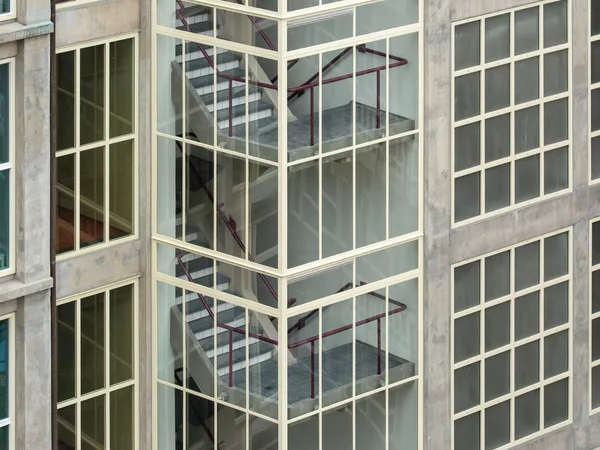
Glass gets red sand and dirt fast and may need specialist treatment to lift sand from cracks and frames.
-

Cladding and stone, pH-neutral
Stone and cladding on modern villas need mild products that do not leave rust marks or etch the surface from oxides.
-

Ground and passers-by protected
Ground and passing residents near quarters and villas are protected by barriers, and run-off water is routed away from paths and doors.
Landmarks of Hail
Reaching facades in Hail differs by position relative to Airif Fort and Barzan Souk. Old quarters near Airif Fort are accessed by rope from quarter roofs, whilst modern villas near Barzan Souk may use powered platforms for easier site movement.
- Qishlah Fortress
- Airif Fort
- Barzan Souk
- University of Hail
- Aja Mountain
How we work
Survey from the roof
Choose access and products
Wash top to bottom
Inspect and hand over
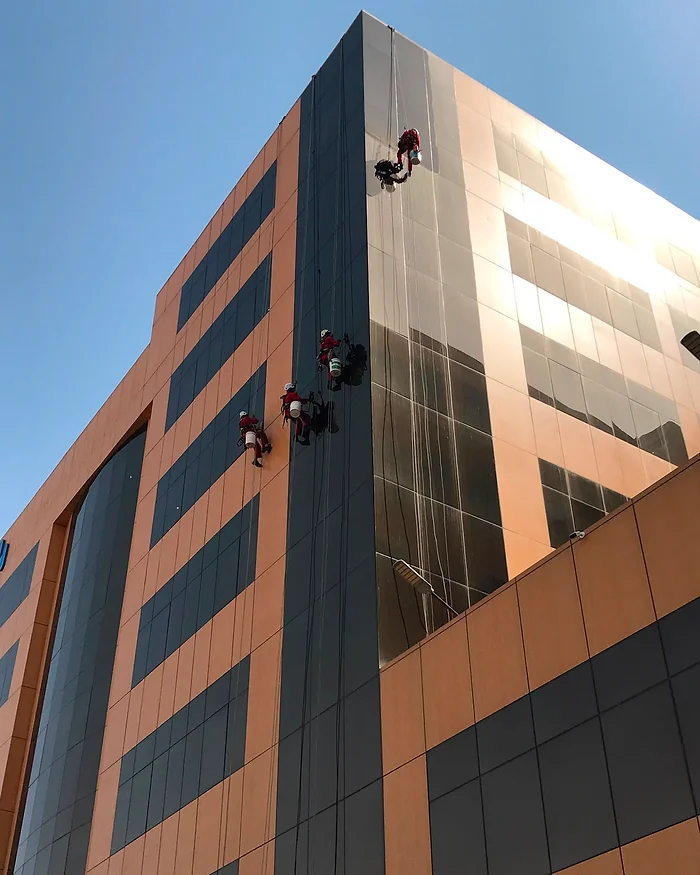
Some of our work
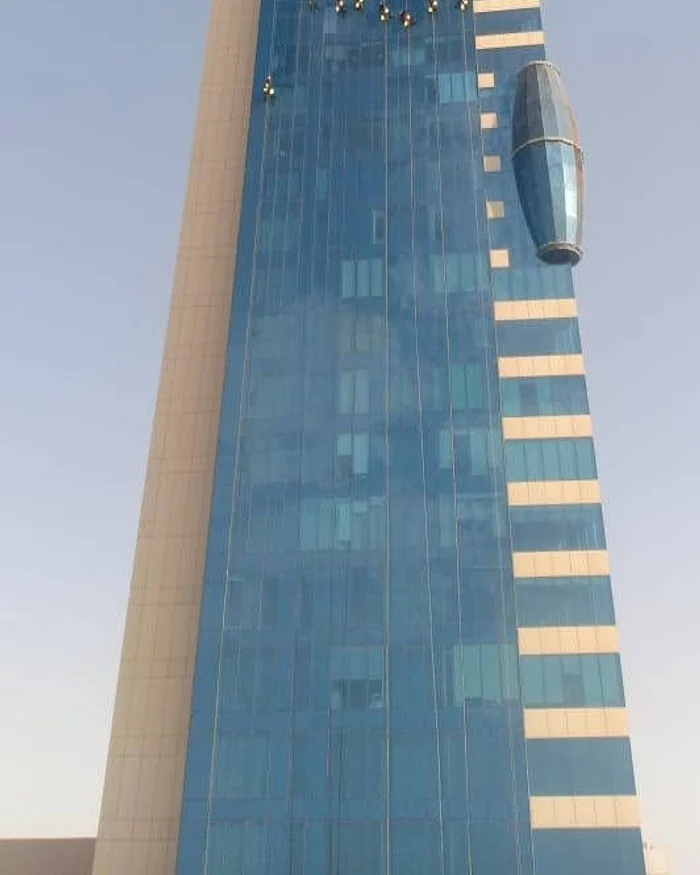
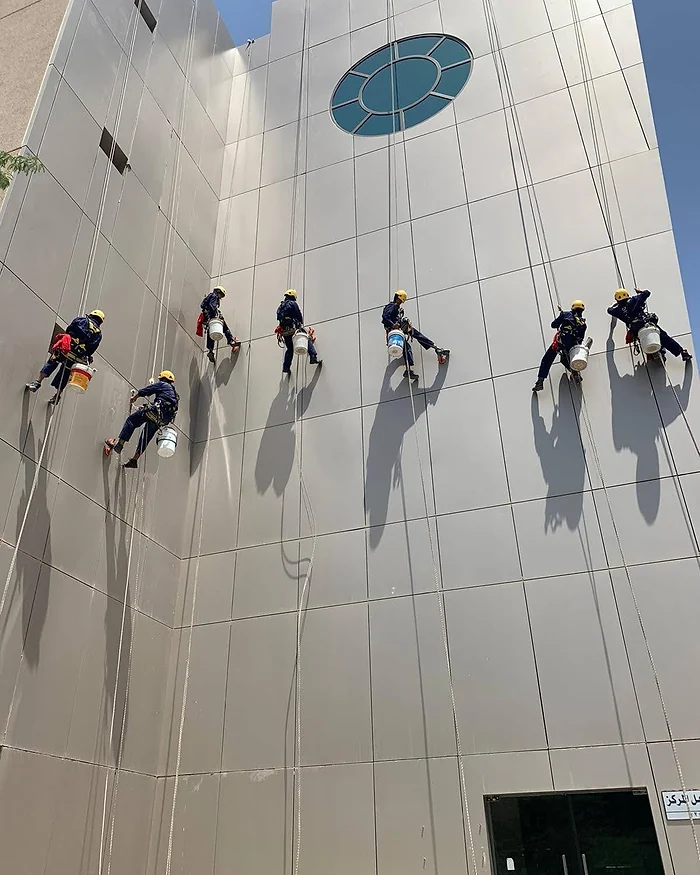
Photos from our team's work.



What is different about Hail Region
Hail sits at the foot of the granite ranges of Aja and Salma, with the Great Nafud desert opening to the north and grain and date farms filling the plain between. Hail city, Baqaa and Al Ghazalah are low rise towns of villas, older mud quarters and new commercial streets. Winters are cold with frost and some rain, and the prevailing winds lift a fine red sand off the Nafud that tints pale render and gathers on glass and ledges. Rain on that dust leaves rust coloured streaks, and the hard well water spots stone if left to dry.
Other services in Hail
The room and the building around it are on one list.