Raghwat Al Janoub Maintenance and Cleaning
Building facade cleaning in Qatif
Qatif is an ancient oasis on the Arabian Gulf coast, where buildings cluster tightly into narrow lanes and the air hangs heavy with salt and summer moisture. Warm salt laden humidity settles on glass, stone and cladding far faster than inland cities, and protective layers thin or corrode within weeks. Facades here face a different set of challenges than dry desert settlements, so their cleaning needs grounding in the coastline itself.
Why a facade needs regular cleaning
-

The surface is protected
The wrong product costs more than the dirt it removes.
-
Access decided on site
We do not pick the access method from an office.
-

Glass stays clear
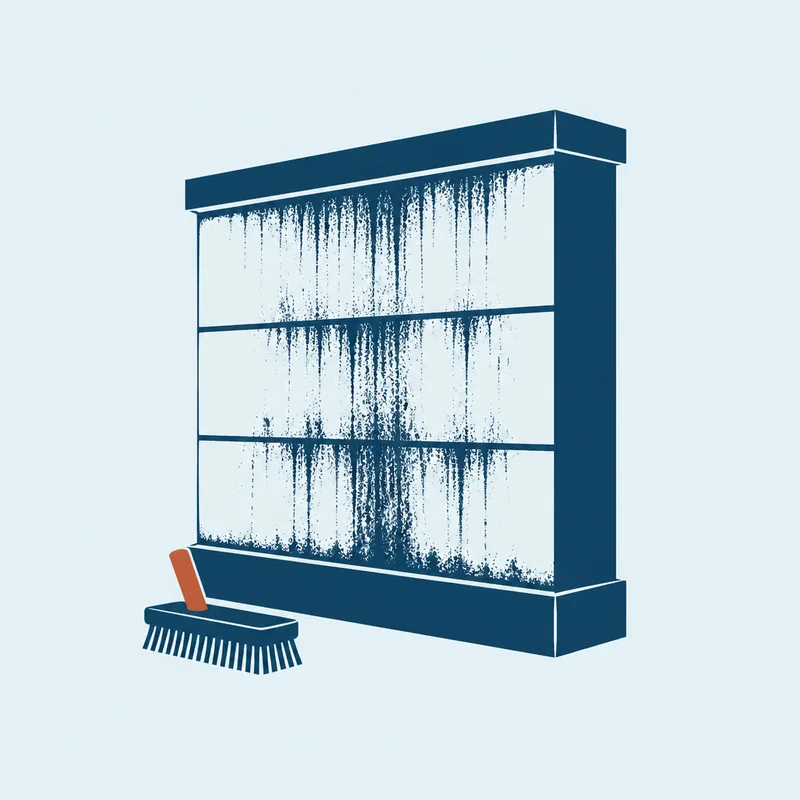
Calcium scale on glass turns into permanent etching if it is left.
-

The building keeps running
We plan the access and the working hours around how the building is used through the day, and we protect the ground, the entrances and anyone passing below.
Why the job is different in Qatif
Glass here shows white salt residue within days rather than weeks, and stone on the old courtyard houses stays damp even in shadow, so algae and mould colonise it steadily through the year. The whole method is set out in our building facade cleaning guide.
-
Sea salt penetrates and damages every material
The air charged with Gulf salt deposits on glass, stone and metals far quicker than cities inland. The white salt layer visible on Riyadh glass after several weeks appears here within days and hardens fast. Regular cleaning stops stone erosion before tiny pits become permanent gouges that no polish can erase.
-
Narrow lanes change how access is planned
Traditional houses clustered around Suq Al-Khamees and through the old town sit so tightly that lanes are too narrow for scaffolding or powered platforms. Rope access from the roof and careful hand techniques become the only safe way up. Every access plan starts with surveying both the roofline and the street.
-
Constant humidity speeds algae and mould growth
Close set buildings and the shadow between them keeps stone and cladding damp long after cleaning ends. Algae and mould colonise north and east facing stone surfaces on villas and apartment blocks almost immediately. Cleaning requires gentle pH neutral chemistry that kills the growth without thinning the old stone further.
What's Included
Qatif sits on the Gulf shore where seasonal rains come sudden and humidity remains high year round. Salt water hangs in the air and settles on every metal fitting, stone surface and pane of glass that faces the water.
-
Roof survey and anchor points
Old courtyard house roofs may be fragile or earth covered, so a full survey from above comes first and anchor points are tested before any weight loads the structure.
-
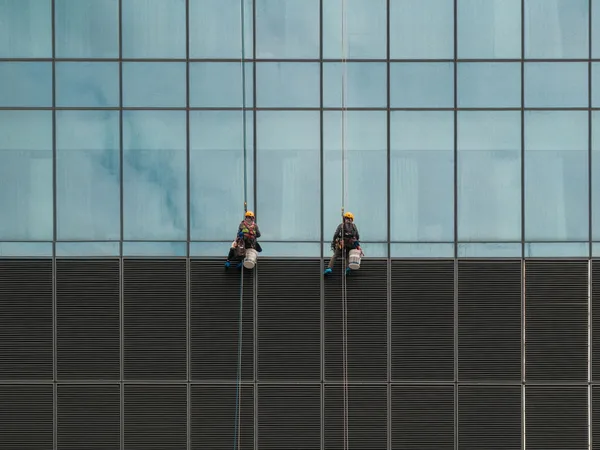
Access chosen: rope or powered
The cramped lanes around Suq Waqif cannot fit a powered lift platform, so rope access and careful hand work from the roofline with double safety lines becomes the method.
-
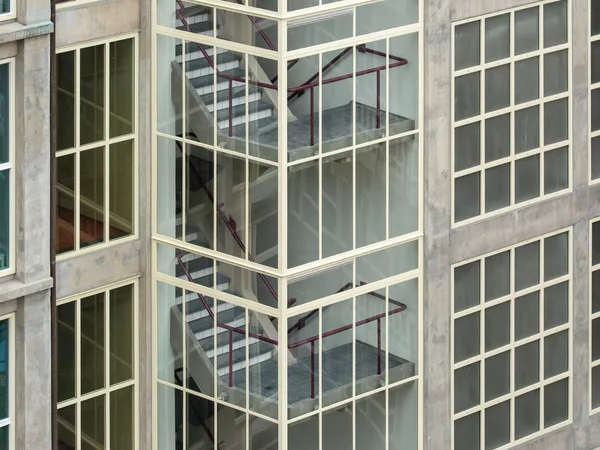
A test patch before the whole elevation
Old masonry needs a test patch on a small area first to choose a gentler chemistry, which is then rinsed thoroughly before the entire elevation gets the same treatment.
-

Glass and curtain walling
Glass on seafacing elevations holds salt and moisture in the pores, so it receives multiple rinse cycles and is left to air dry rather than towelled.
-
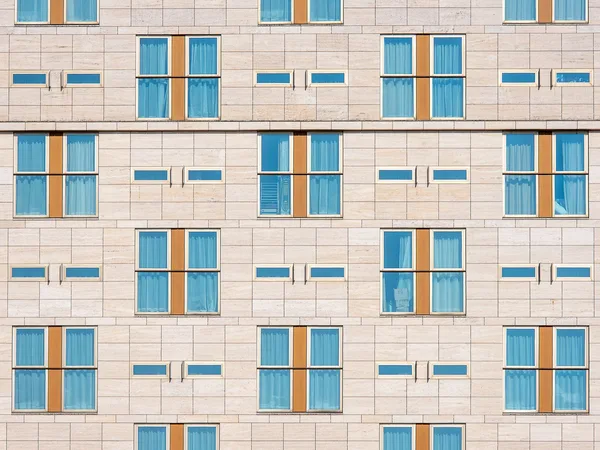
Cladding and stone, pH-neutral
Cladding and stone require a strongly pH neutral formula because the salt laden air makes alkaline chemistry strip the protective layer and cause uneven corrosion very quickly.
-
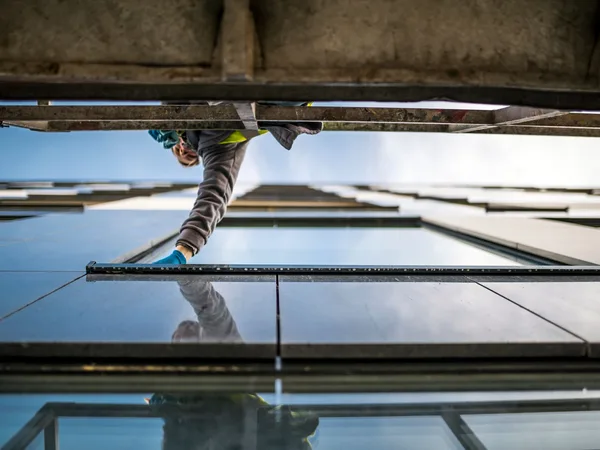
Ground and passers-by protected
Ground level and pedestrian routes need protection from seeping water, and lower floor windows are covered before work begins because old stone absorbs moisture readily.
The character of Qatif
Historic district: close-set buildings, narrow lanes and ageing services
Historic buildings packed into narrow lanes mean rope access and hand technique are the only safe methods, and the first site visit determines everything about how the job will run. Thin salt dampened stone and constant air humidity demand more caution and more thoughtful cleaning than modern buildings elsewhere.
How we work
Survey from the roof
Choose access and products
Wash top to bottom
Inspect and hand over
Some of our work
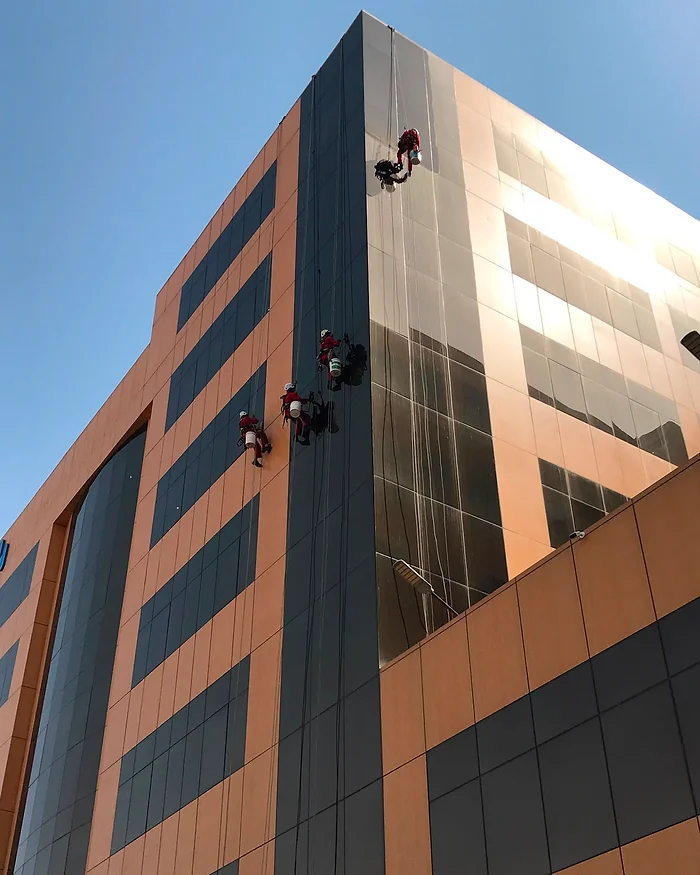
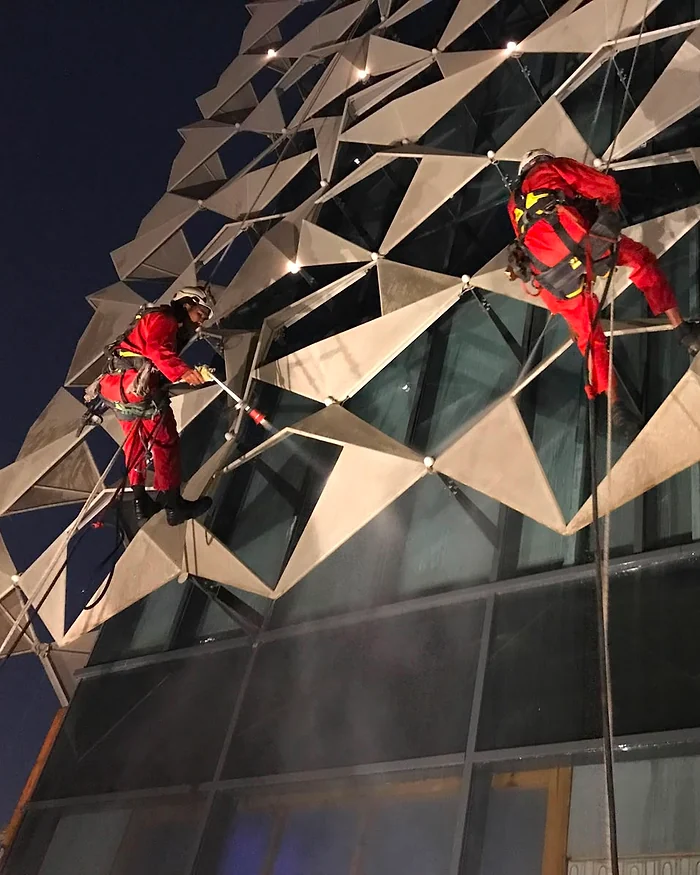
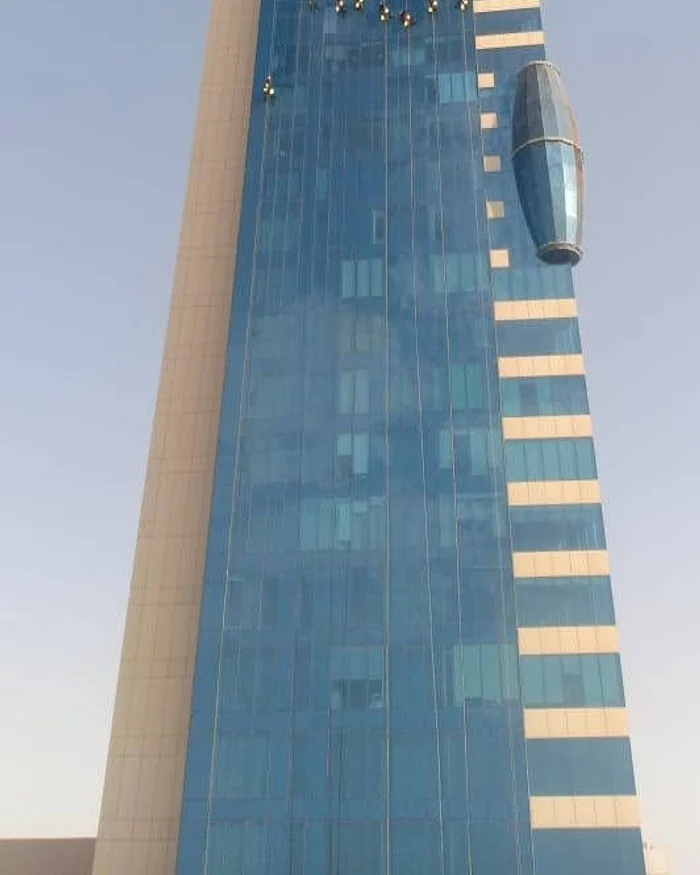
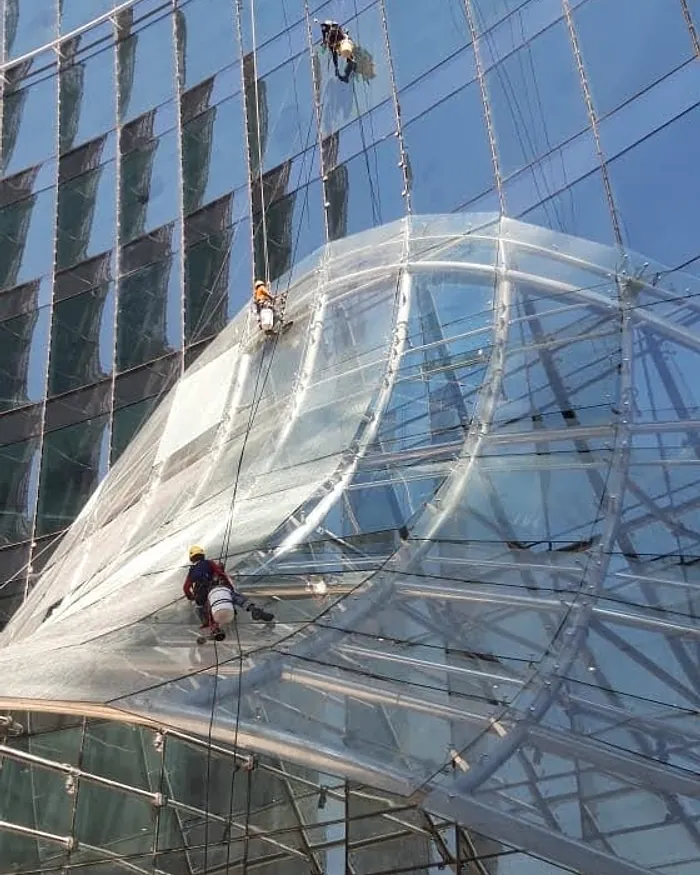
Photos from our team's work.
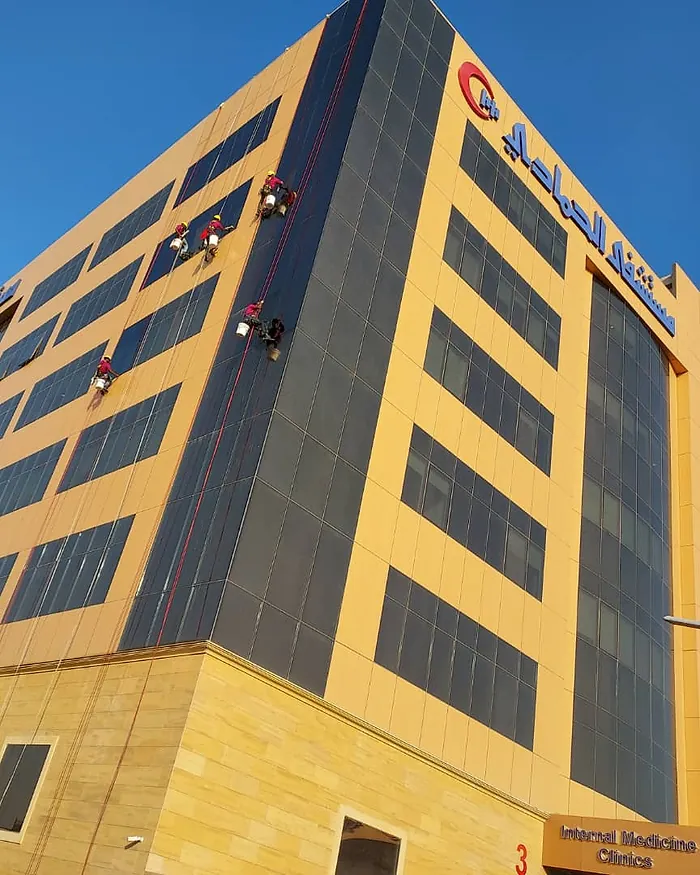
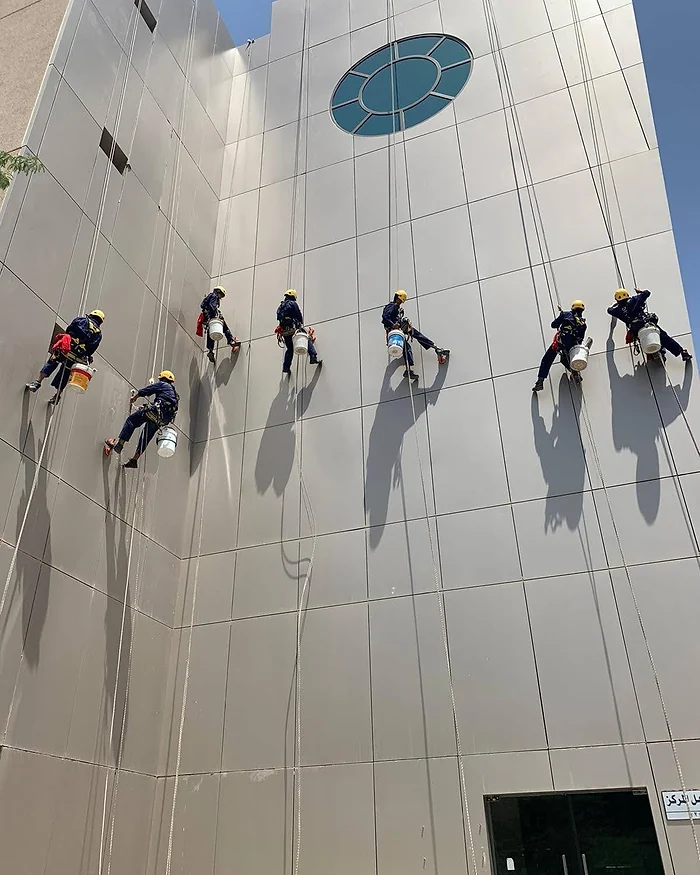
What is different about Eastern Province
The Eastern Province is the most humid part of the country. Dammam, Khobar, Dhahran and Jubail face the Gulf, where warm salt laden air and summer haze leave a sticky film on glass towers, corniche apartments and the cladding of Aramco and industrial housing, and refinery and petrochemical fallout at Jubail and Ras Tanura adds a fine grey grime. Al Ahsa is an oasis of palm groves, springs and older stone and mud quarters around Hofuf, while Hafr Al Batin inland is dry and swept by northern shamal dust. Metal fittings corrode and marble dulls quickly near the water.
Other services in Qatif
The room and the building around it are on one list.