Raghwat Al Janoub Maintenance and Cleaning
Building facade cleaning in Ad Dilam
Ad-Dilam is a historic town with densely packed buildings clustered around a restored wall and watchtower, and its narrow lanes and close-set structures mean access to elevations must be planned with precision. Fine dust from the eastern dunes settles rapidly on stone and glass, and the hard groundwater leaves stubborn lime scale that clings to every surface.
Why a facade needs regular cleaning
-

The surface is protected
The wrong product costs more than the dirt it removes.
-

Access decided on site
We do not pick the access method from an office.
-

Glass stays clear
Calcium scale on glass turns into permanent etching if it is left.
-

The building keeps running
We plan the access and the working hours around how the building is used through the day, and we protect the ground, the entrances and anyone passing below.
Why the job is different in Ad Dilam
The densely built heritage quarters cast shadow across walls for much of the day, so facades stay damp longer than those on detached villas and accumulate deep dirt deposits more quickly. The whole method is set out in our notes on building facade cleaning.
-
Dense layout blocks conventional access routes
The narrow lanes and close-set buildings of Ad-Dilam make heavy scaffolding and mechanical lifts impractical. Access relies on precise rope techniques and coordination with neighbours who live only metres away, slowing setup and requiring careful communication.
-
Ageing stone demands gentle chemical treatment
The heritage stone in this town is decades old and its surface is weaker than modern stone. Strong alkaline cleaners risk breaking down the material itself, and the hard groundwater deposits thick lime scale that bonds easily to porous aged surfaces.
-
Trapped shade and moisture breed rapid soiling
Shadow between closely set buildings traps moisture on walls and glass, creating a damp surface where dust and mould settle together. Regular cleaning here stops accumulation before it becomes permanent damage that etches the stone.
What's Included
Ad-Dilam sits on a plain bounded by sand dunes to the east and hills to the west, where fine desert dust reaches regularly through spring and summer winds arriving from the Dahna sands.
-
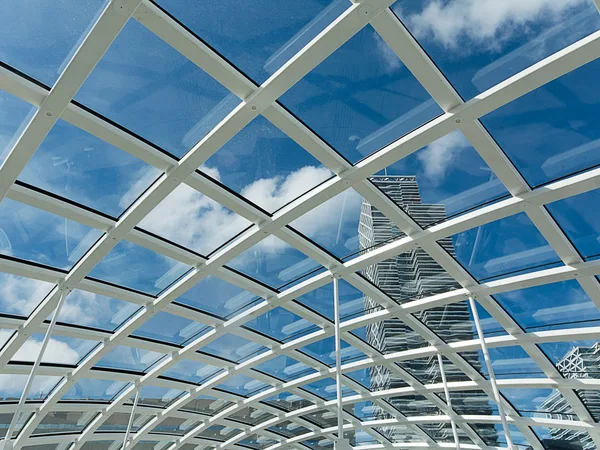
Roof survey and anchor points
Close-set heritage buildings demand careful roof survey to confirm structural soundness, as old surfaces may be cracked or uneven and anchor points must be chosen conservatively to avoid damage.
-
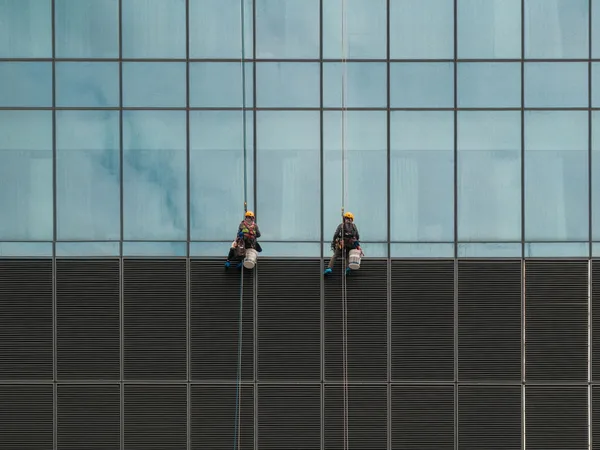
Access chosen: rope or powered
Narrow lanes rule out heavy scaffolding rigs, so we depend on rope systems and rooftop anchors, and coordination with residents and street users is essential to avoid congestion or obstruction.
-
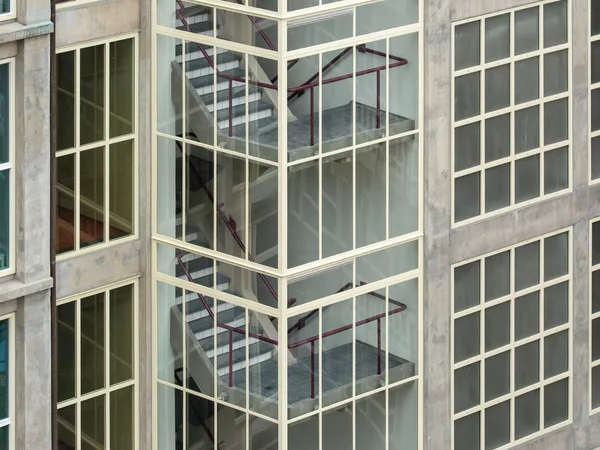
A test patch before the whole elevation
We test any product on lower-sensitivity heritage stone first, because this town's stone may be fragile, traditionally treated in ways we cannot always identify with certainty.
-

Glass and curtain walling
Glass in the heritage zone may be aged or original to old frames, and hard water leaves deep lime scale, so we use pH-neutral solutions and gentle motion to avoid scratching or etching.
-

Cladding and stone, pH-neutral
Cladding is rare in the historic core, but stone and marble require pH-neutral products that do not strip protective coatings or leave stubborn white lime deposits behind.
-
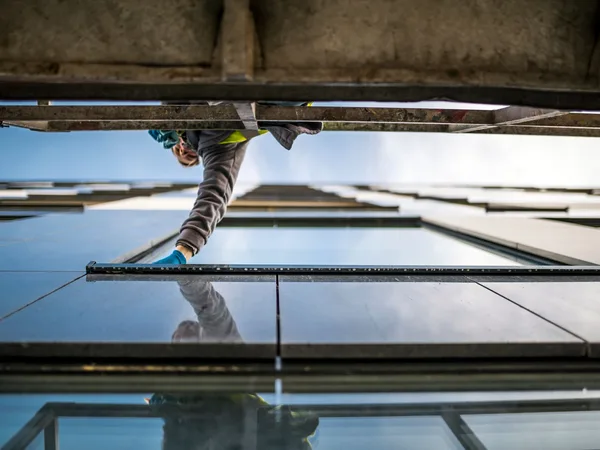
Ground and passers-by protected
Close lane spacing raises the risk of water reaching neighbouring windows and doors, so we use barriers and channels, and time work for calm air to minimise spray drift toward other facades.
Ad Dilam on the map
Ad Dilam sits about 49.5 km from Al-Kharj and about 65.5 km from Hawtat Bani Tamim.
Open in Google MapsHow we work
Survey from the roof
Choose access and products
Wash top to bottom
Inspect and hand over
Some of our work
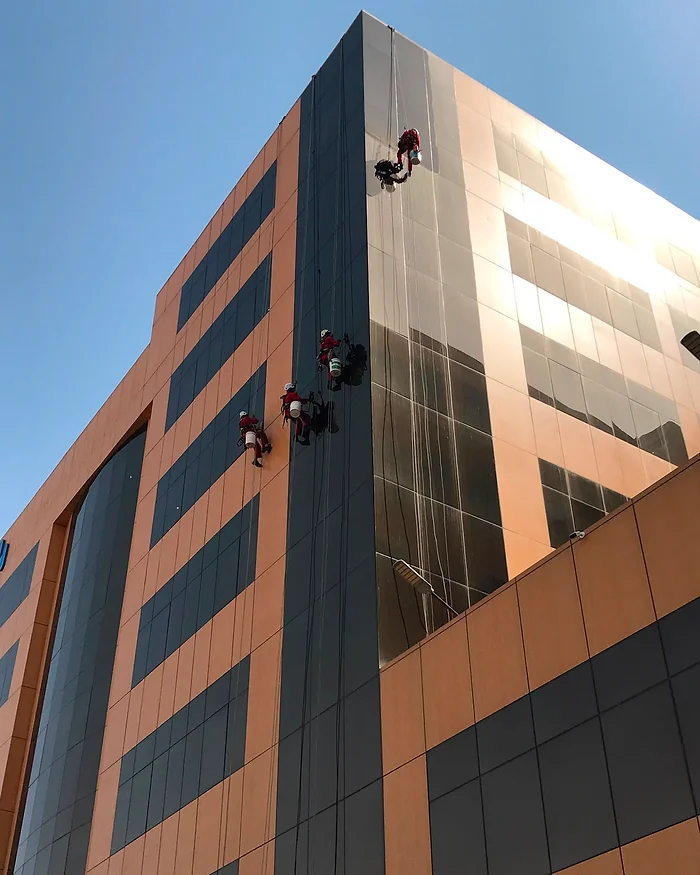
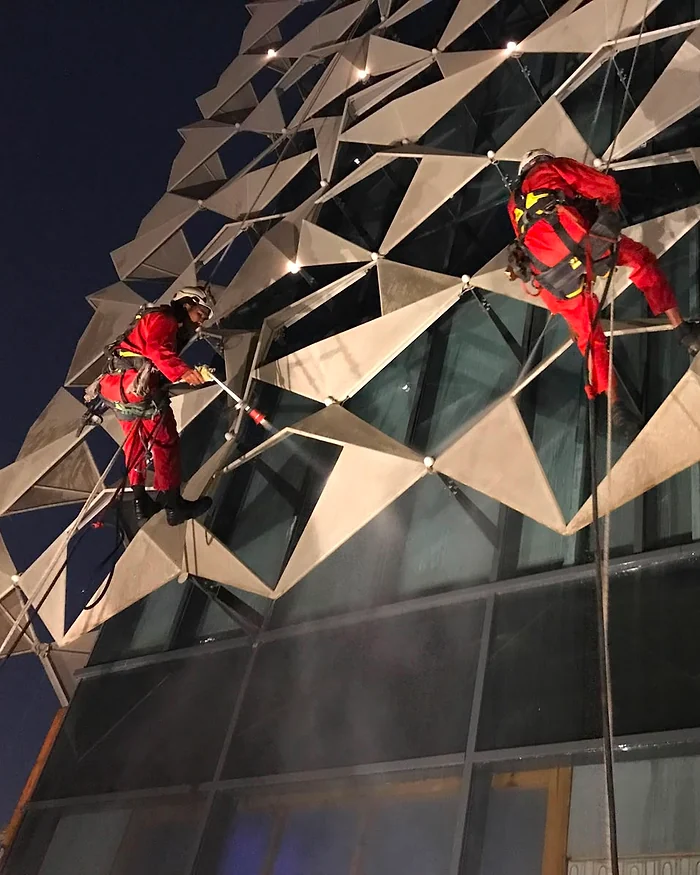
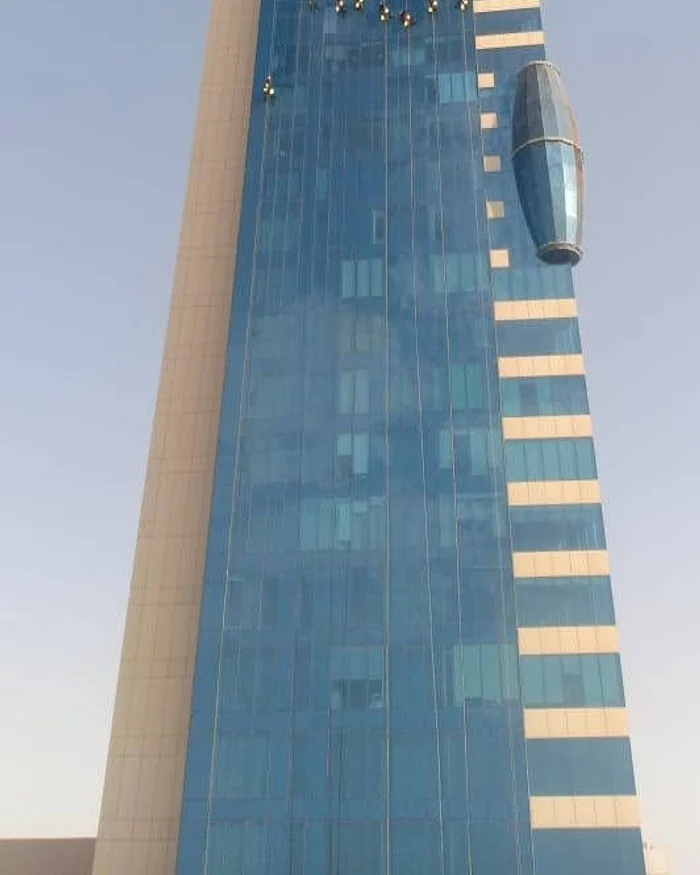
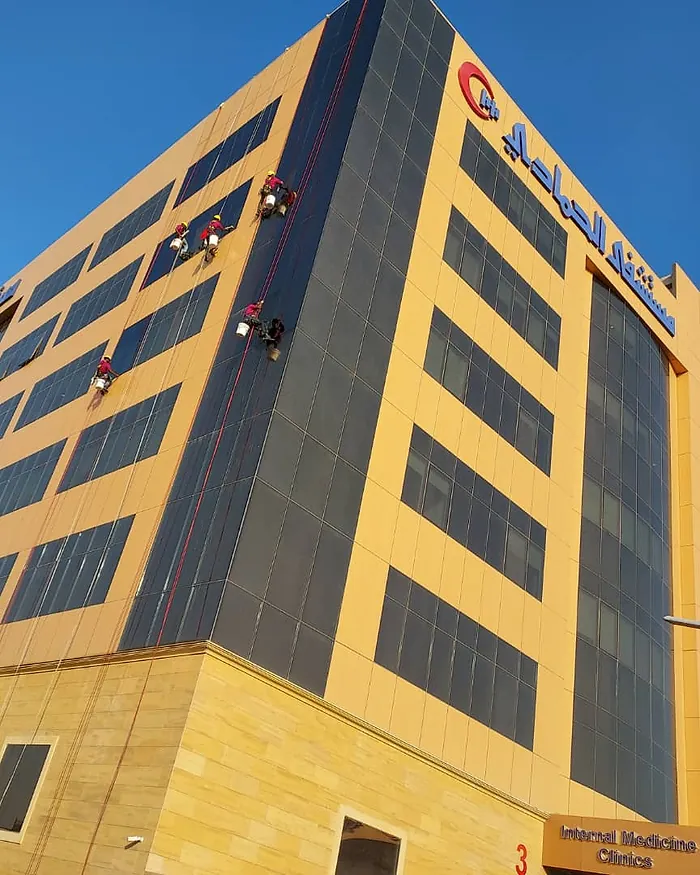
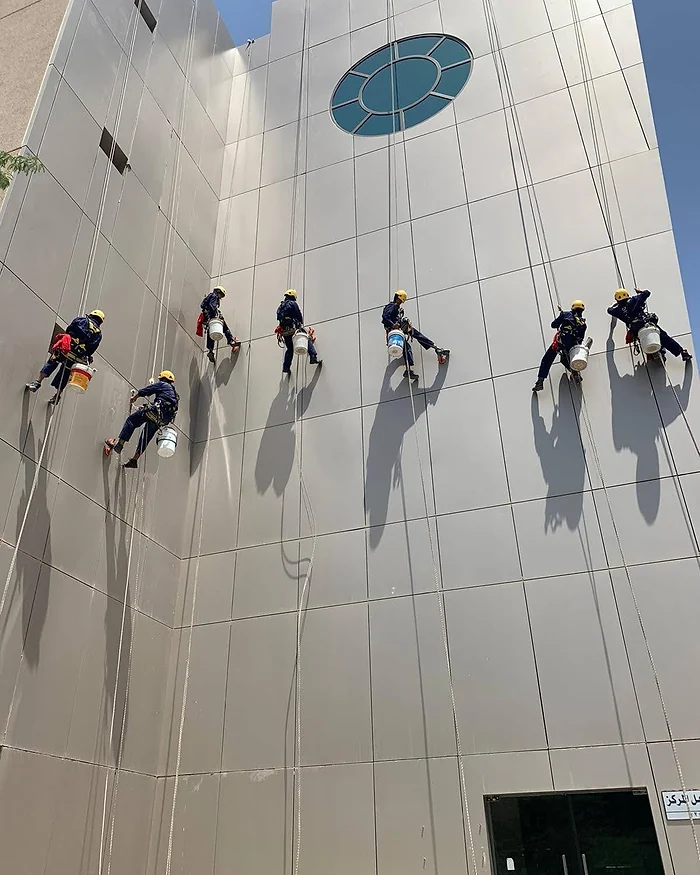
Photos from our team's work.

What is different about Riyadh Region
Riyadh Region covers the central Najd plateau from the capital out to Al Kharj, Al Majma'ah, Al Zulfi, Dawadmi, Al Quwaiiyah and Wadi Al Dawasir. The climate is dry, with fierce summer heat, cool winters and spring dust storms carried off the Dahna sands to the east and the Nafud beyond Al Zulfi. The capital's glass towers and cladding sit alongside stone and marble villas, mosques and government buildings in the towns, with farms and palm groves around Al Kharj and the southern wadis. Fine dust abrades polished floors, and the hard groundwater leaves stubborn spotting on glass and stone.
Other services in Ad Dilam
The room and the building around it are on one list.