Raghwat Al Janoub Maintenance and Cleaning
Building facade cleaning in Al-Kharj
Al-Kharj is an oasis southeast of Riyadh ringed by farms and irrigated fields. Stone villas and apartment blocks spread across very low lying ground. Fine dust from agriculture settles constantly on facades, and the hard groundwater leaves stubborn scaling on glass and stone.
Why a facade needs regular cleaning
-

The surface is protected
The wrong product costs more than the dirt it removes.
-
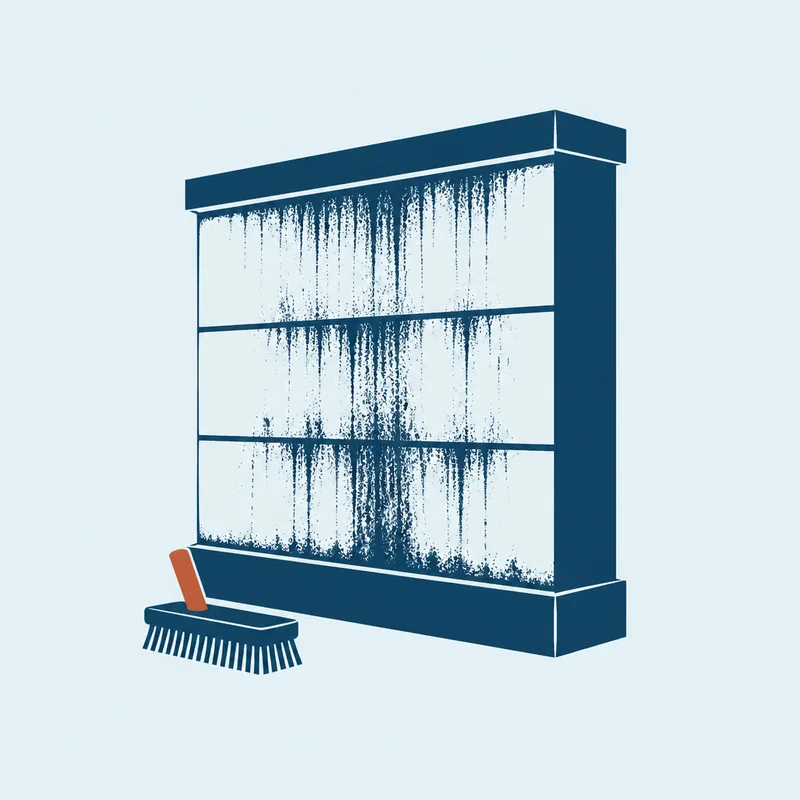
Access decided on site
We do not pick the access method from an office.
-

Glass stays clear
Calcium scale on glass turns into permanent etching if it is left.
-

The building keeps running
We plan the access and the working hours around how the building is used through the day, and we protect the ground, the entrances and anyone passing below.
Why the job is different in Al-Kharj
Harvest and agricultural dust carries very fine clay and lime particles. The groundwater is so hard that white scale forms on glass within a day of cleaning in the dry climate. The whole method is set out in our building facade cleaning guide.
-
Fine agricultural dust from surrounding fields
Al-Kharj is ringed by orchards and large scale farmland. Harvesting and soil work raise extremely fine dust carrying organic and mineral particles. This dust falls on facades regularly throughout the growing season.
-
Limestone from extraordinarily hard groundwater
Groundwater in Al-Kharj is among the hardest in the Kingdom due to ancient geological formations. Limescale deposits on glass rapidly and letting it dry creates a hard crust that water alone does not remove. Regular cleaning before buildup is essential.
-
Field moisture traps dust and slows drying
Irrigation spray and field moisture raise humidity around buildings. Damp air holds dust on surfaces and prevents quick drying. Water and salt penetrate stone pores and remain longer in the trapped moisture.
What's Included
Al-Kharj lies in a low plain surrounded by extensive farmland. Humidity from the fields and irrigation is higher than Riyadh. Salt and minerals in the groundwater precipitate on facades continuously.
-
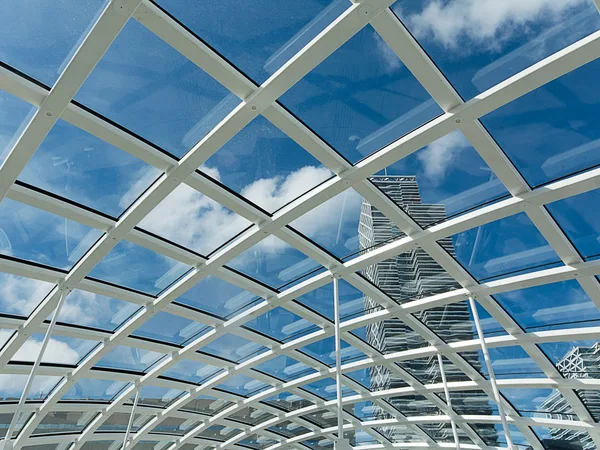
Roof survey and anchor points
Roofs of villas and apartment blocks are standard height but may be open with gardens alongside. Anchor points are straightforward but work around aerials and tanks needs care. The ground may be sandy so we avoid loading equipment heavily.
-
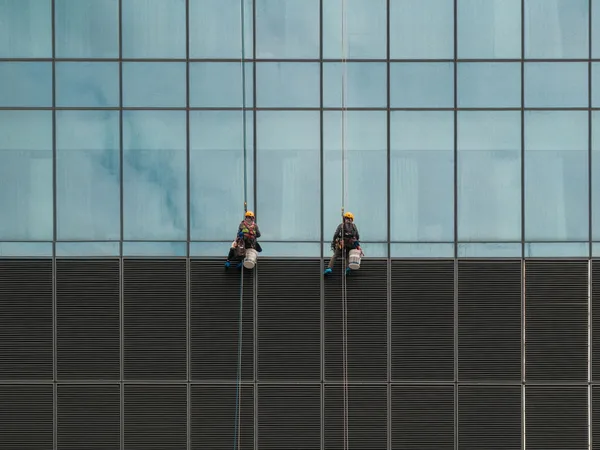
Access chosen: rope or powered
Powered lifts are possible but ground around buildings may be unpaved. We need solid asphalt or concrete base. Farm access roads may be too narrow for large equipment.
-
A test patch before the whole elevation
We test first on a corner stone because granite may be weakened if salt crust has built up over years. Deep cleaning may leave voids beneath the surface. Testing shows the actual strength.
-
Glass and curtain walling
Glass is coated in heavy limescale. Warm water with very weak acid dissolves it. Strong acid is not used as it etches glass. Regular gentle rubbing works better than high pressure.
-
Cladding and stone, pH-neutral
Stone and mortar are under lime and salt stress. Mortar may leach white salts after cleaning. We use only neutral products and allow full drying before assessing results.
-
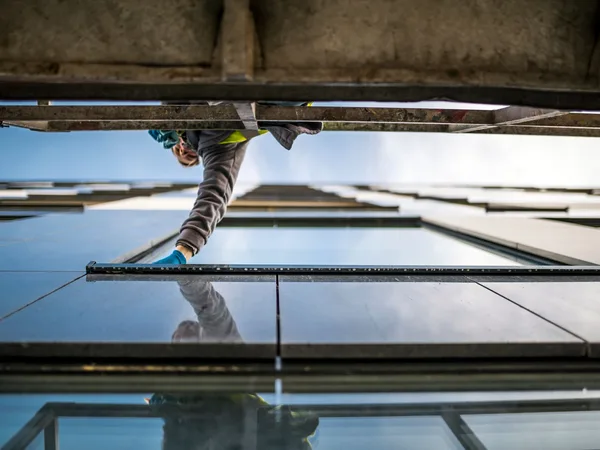
Ground and passers-by protected
Ground around the building may be an irrigated garden. Drainage must be directed carefully away from planted areas. The salt in water can harm plants so we use only environmentally safe products.
Landmarks of Al-Kharj
Prince Sattam bin Abdulaziz University, King Abdulaziz Palace and Abu Jafan Palace are government sites nearby. Facades around them need special permission and work is coordinated with the authorities. Al-Kharj Industrial City is adjacent and may affect air quality on certain days.
- Prince Sattam bin Abdulaziz University
- King Abdulaziz Palace
- Abu Jafan Palace
- Al-Kharj Industrial City
How we work
Survey from the roof
Choose access and products
Wash top to bottom
Inspect and hand over
Some of our work
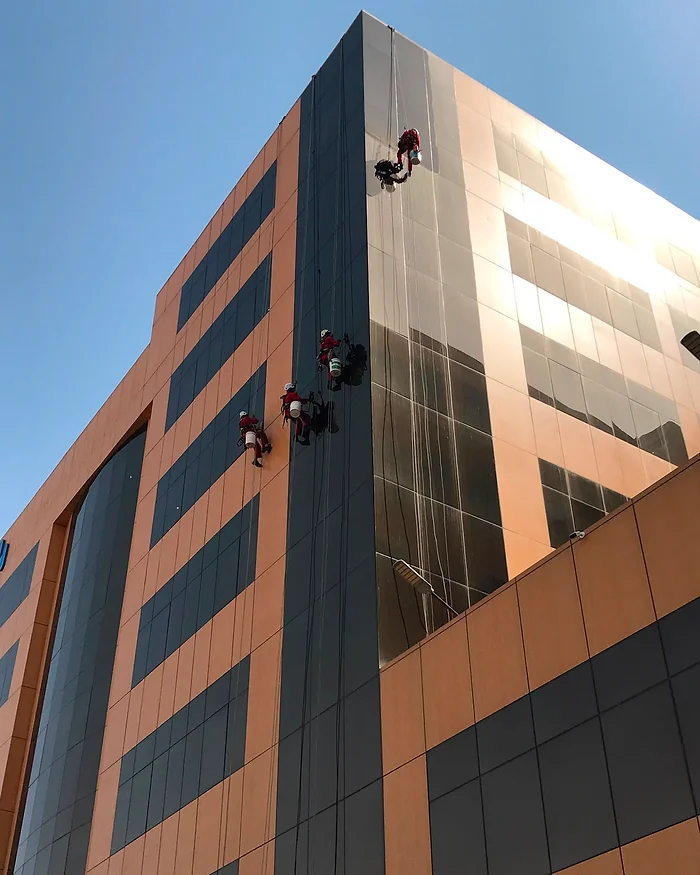
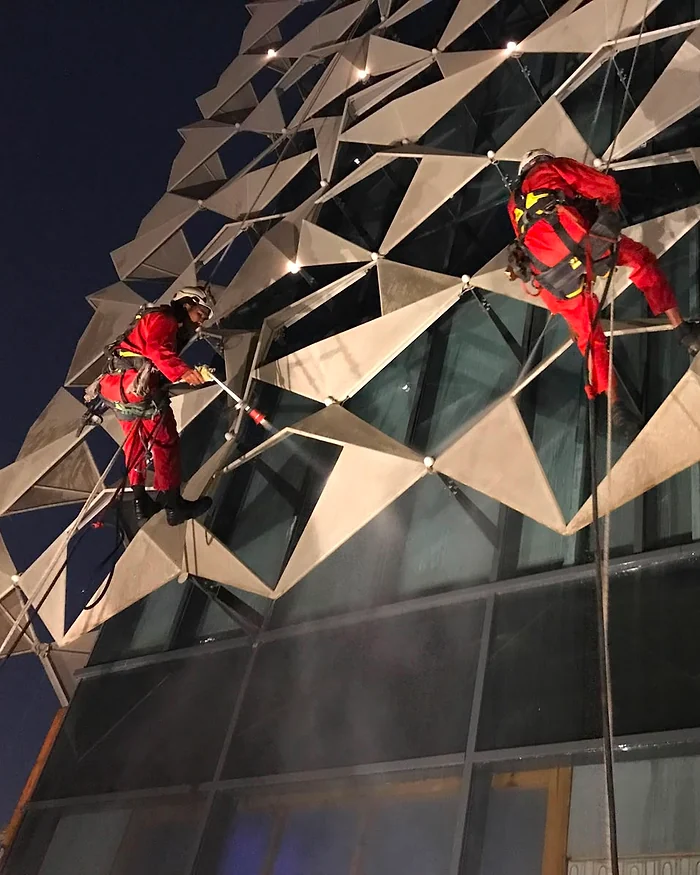
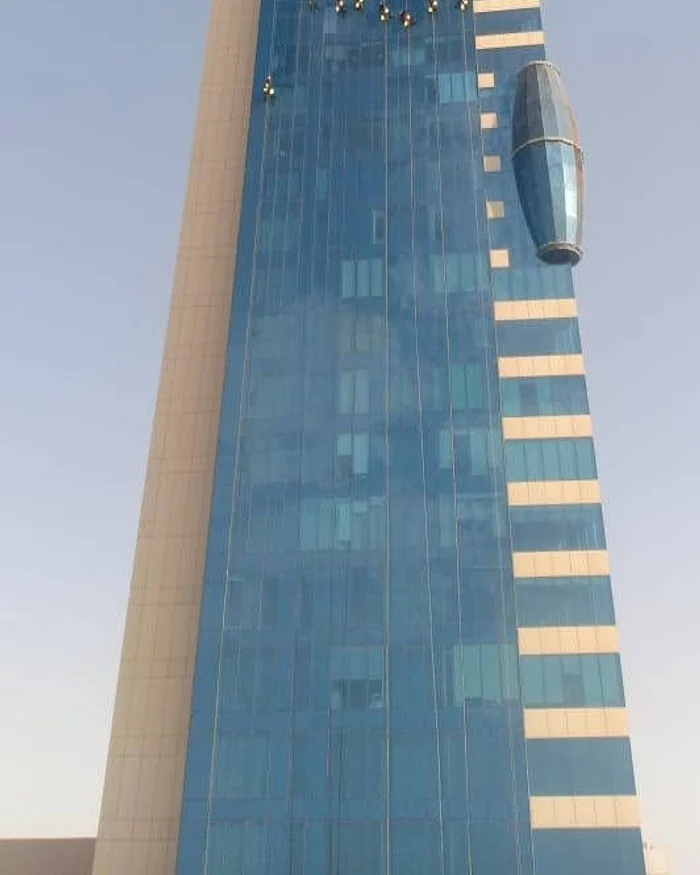
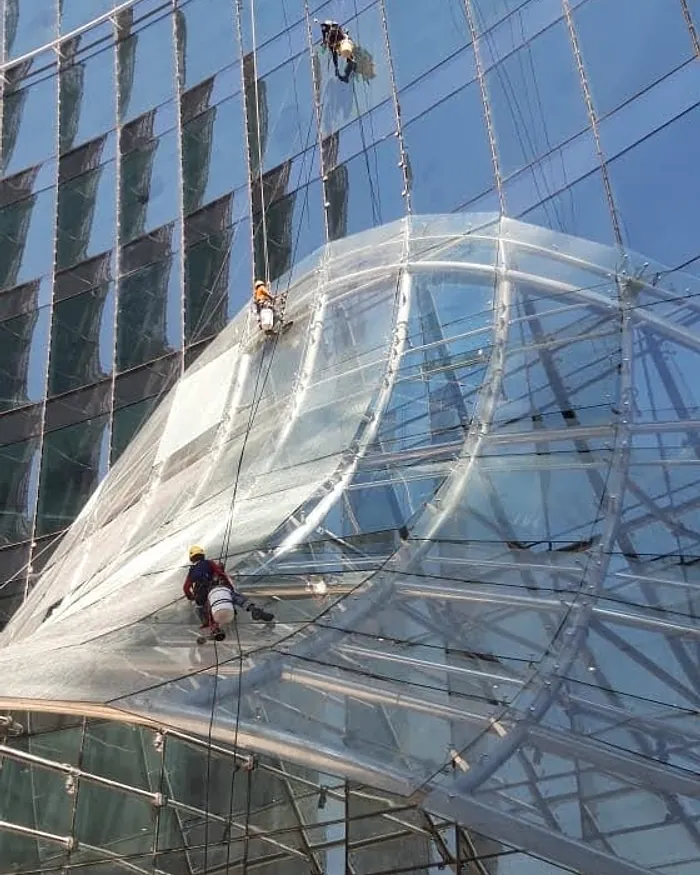
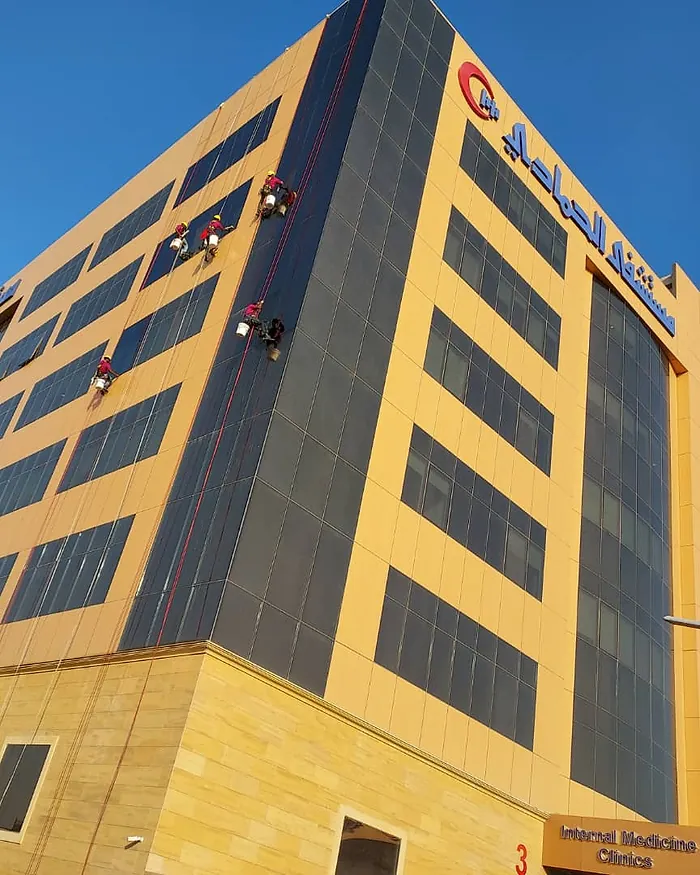
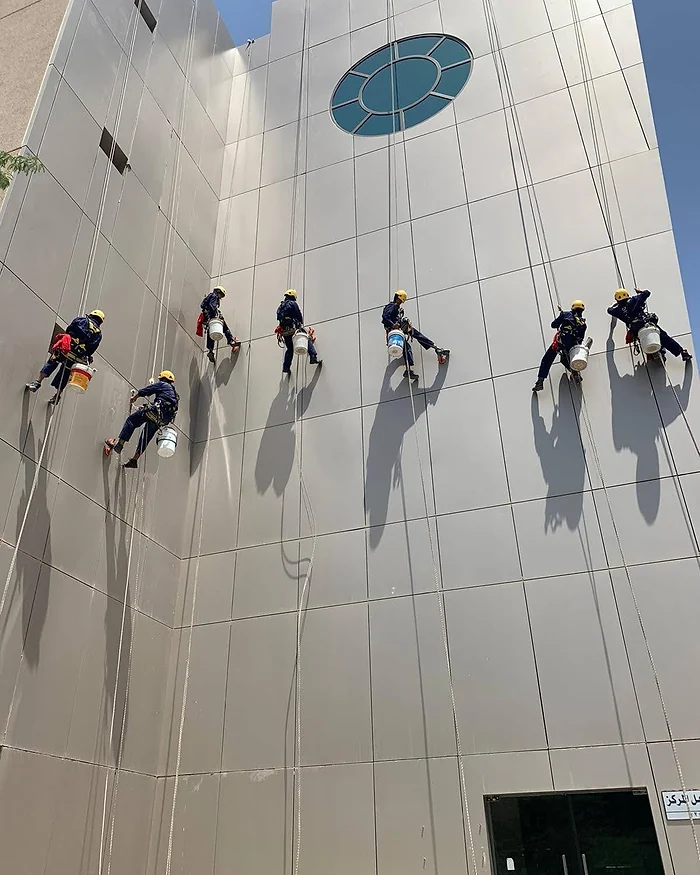
Photos from our team's work.
What is different about Riyadh Region
Riyadh Region covers the central Najd plateau from the capital out to Al Kharj, Al Majma'ah, Al Zulfi, Dawadmi, Al Quwaiiyah and Wadi Al Dawasir. The climate is dry, with fierce summer heat, cool winters and spring dust storms carried off the Dahna sands to the east and the Nafud beyond Al Zulfi. The capital's glass towers and cladding sit alongside stone and marble villas, mosques and government buildings in the towns, with farms and palm groves around Al Kharj and the southern wadis. Fine dust abrades polished floors, and the hard groundwater leaves stubborn spotting on glass and stone.
Other services in Al-Kharj
The room and the building around it are on one list.