Raghwat Al Janoub Maintenance and Cleaning
Building facade cleaning in Jubail
Jubail is a planned industrial city on the Gulf coast where seawater salts and petrochemical fallout accumulate on factory, warehouse and residential facades faster than anywhere else in the region. The warm salt-laden air leaves a thick sticky film that ages a building's appearance rapidly, and the mineral dust from the surrounding complexes embeds itself into every surface type.
Why a facade needs regular cleaning
-
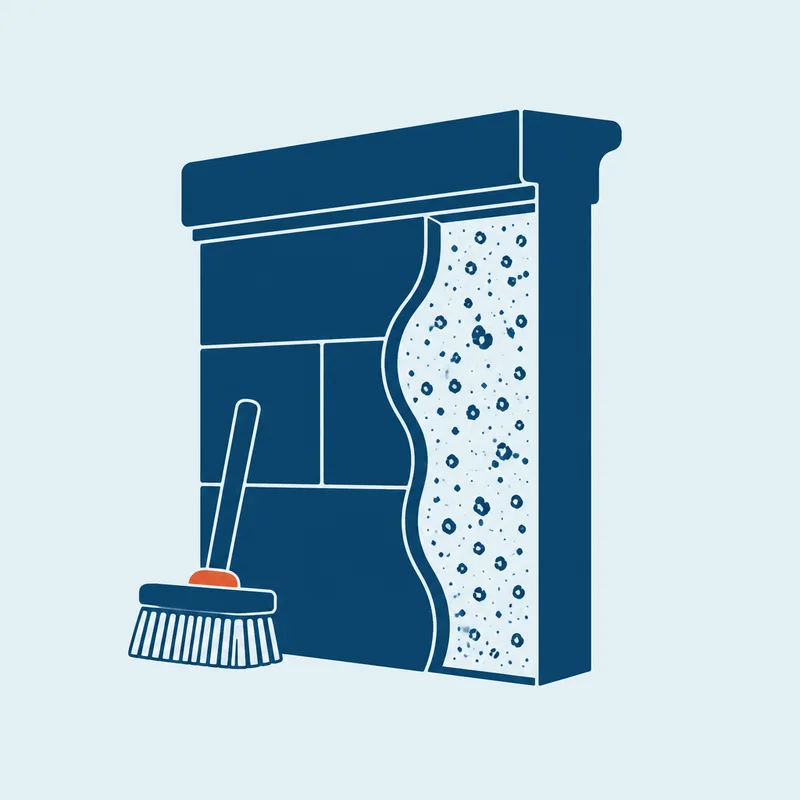
The surface is protected
The wrong product costs more than the dirt it removes.
-
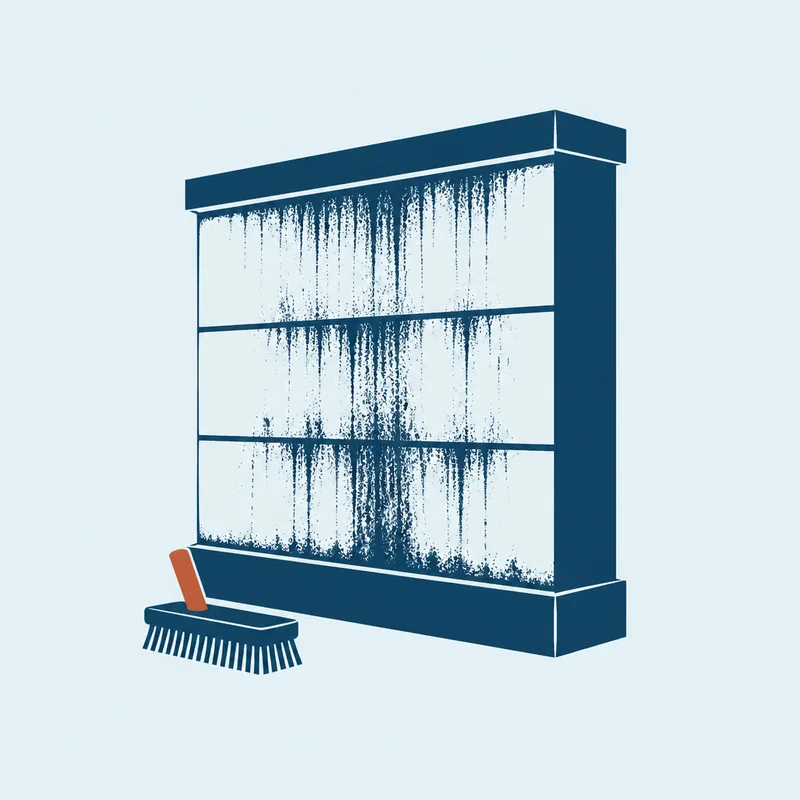
Access decided on site
We do not pick the access method from an office.
-

Glass stays clear
Calcium scale on glass turns into permanent etching if it is left.
-

The building keeps running
We plan the access and the working hours around how the building is used through the day, and we protect the ground, the entrances and anyone passing below.
Why the job is different in Jubail
Factory dust here is heavier and stickier than desert dust alone, leaving metallic residues that require specific treatment depending on the cladding type. The whole method is set out in our building facade cleaning guide.
-
Severe salt corrosion of metals and glass
Salt-laden humidity corrodes aluminium frames and steel fixtures at accelerated speed, and leaves a thick crystalline salt layer on glass that hardens and becomes difficult to remove. Regular cleaning prevents this oxidation before it penetrates the protective coating beneath.
-
Fine refinery dust that bonds instantly
Nearby industrial facilities release fine grey particles that mix with salt and work into every crack and crevice. This mixture requires specific chemical treatment that does not harm metal cladding or scratch tempered glass.
-
Continuous humidity and rapid temperature swings
The contrast between intense heat and humidity creates hairline fractures in mortar and paint. Water penetrates these cracks and leaches white salts that emerge as stubborn staining on stone and polished concrete.
What's Included
Jubail sits directly on the Gulf where salt-saturated air meets high summer humidity and constant emissions from the major petrochemical facilities and ports that surround the city.
-
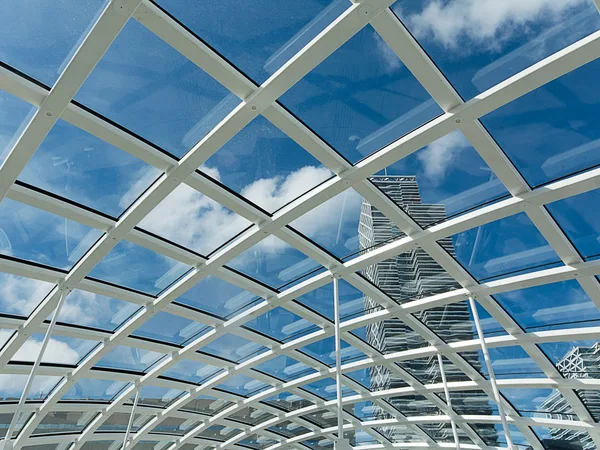
Roof survey and anchor points
Industrial roofing may be uneven or cluttered with equipment, so we conduct a thorough survey to locate safe anchor points on the existing steel structures.
-
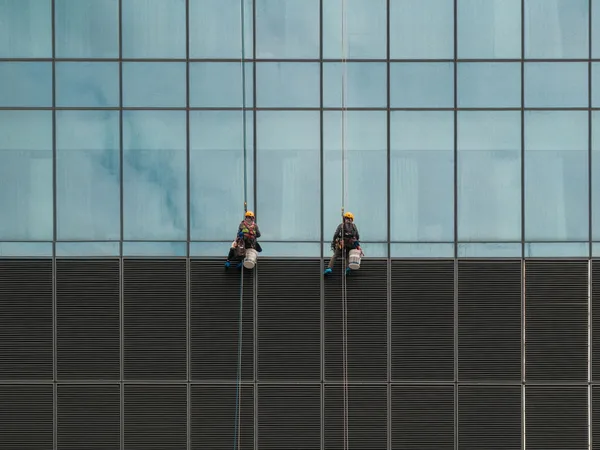
Access chosen: rope or powered
Constant salt air means choosing salt-resistant ropes, and larger industrial towers may require powered access platforms to safely reach upper storeys.
-
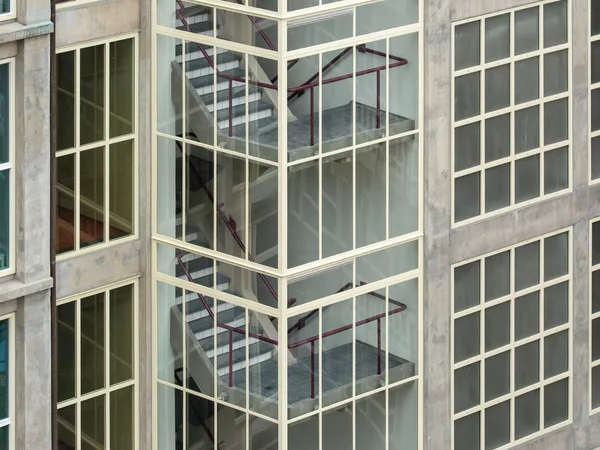
A test patch before the whole elevation
We test products on a small section of cladding or stone first to ensure salts do not recrystallise and chemical reactions do not leave residues afterwards.
-
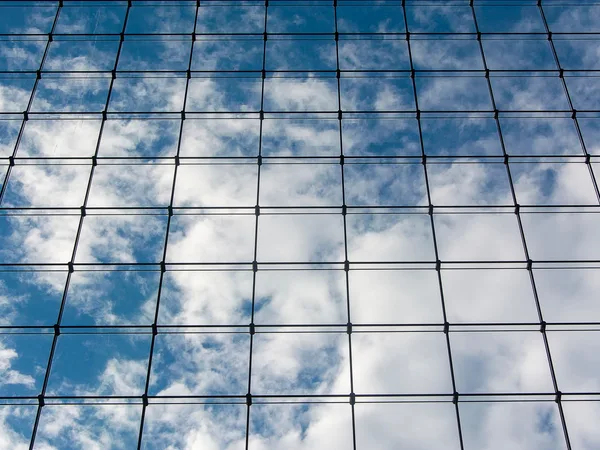
Glass and curtain walling
Industrial glass may be tempered or specially treated, so product compatibility is verified before application to the full elevation.
-
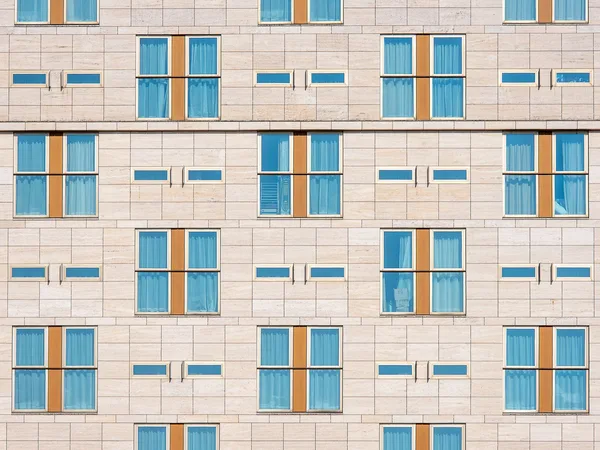
Cladding and stone, pH-neutral
Metal cladding and natural stone need separate treatment: metal panels use mild pH-neutral acid, while stone requires gentler products that respect the material.
-
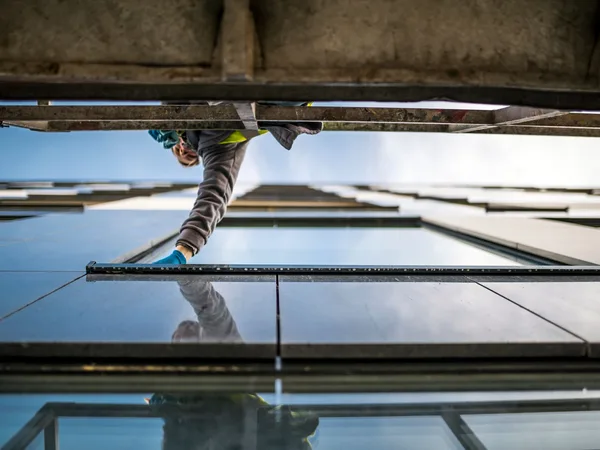
Ground and passers-by protected
The industrial zone sees constant truck and machinery traffic, so we erect barriers around the work area and sweep ground floors of salt and oil deposits after completion.
Jubail on the map
Jubail sits about 50 km from Safwa and about 52.5 km from Ras Tanura.
Open in Google MapsHow we work
Survey from the roof
Choose access and products
Wash top to bottom
Inspect and hand over
Some of our work
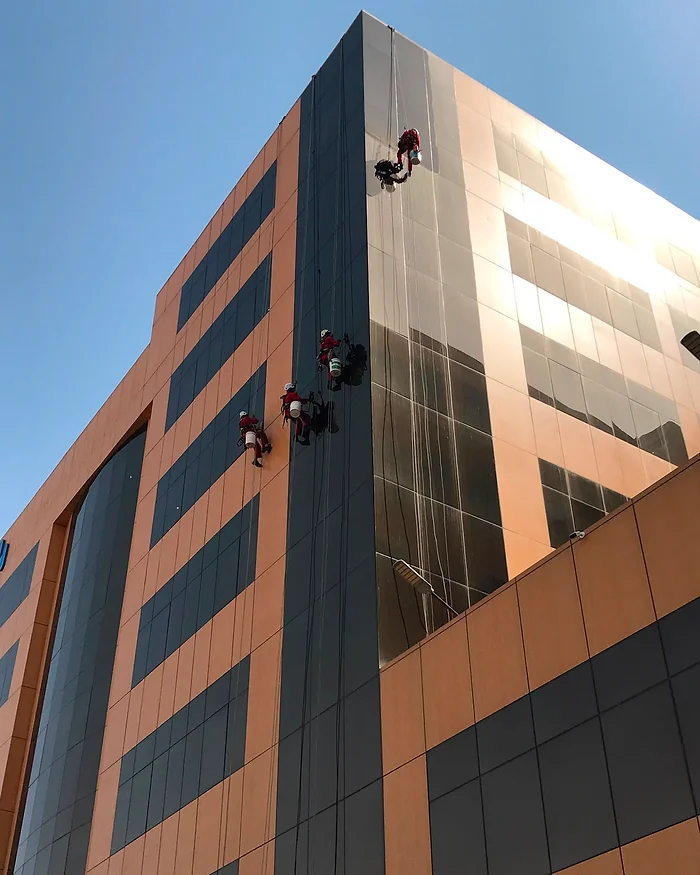
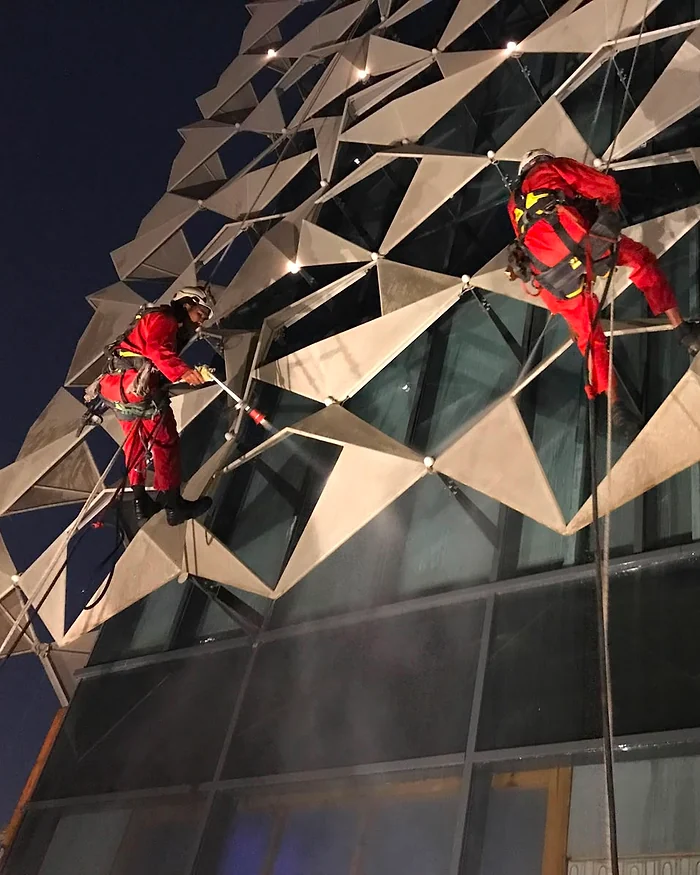
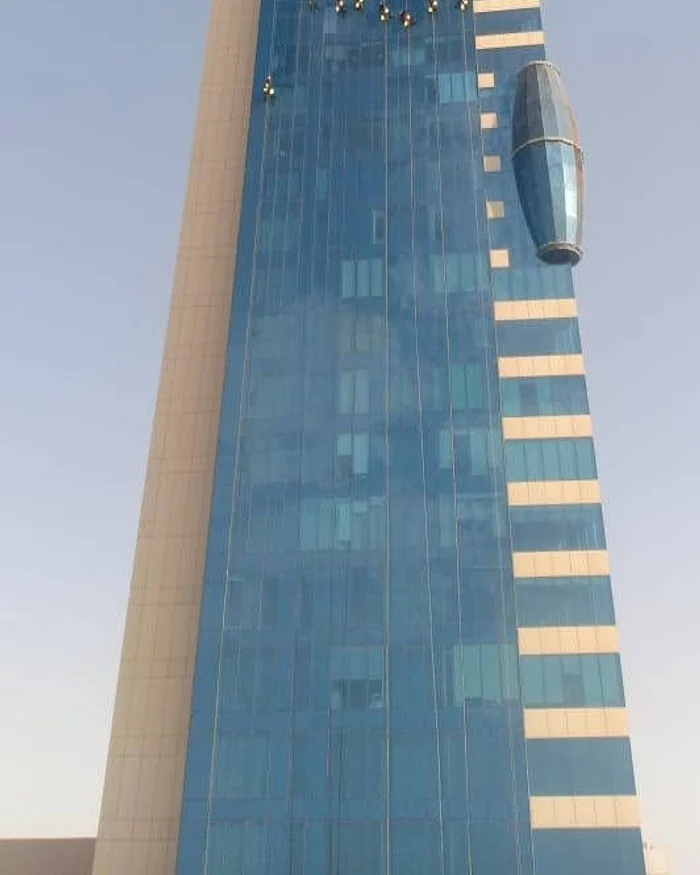
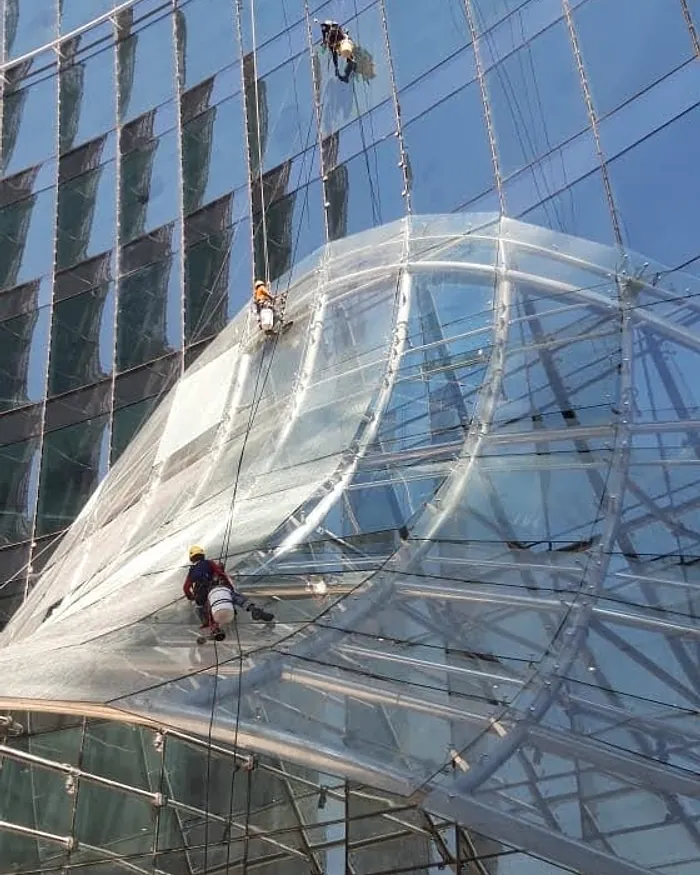
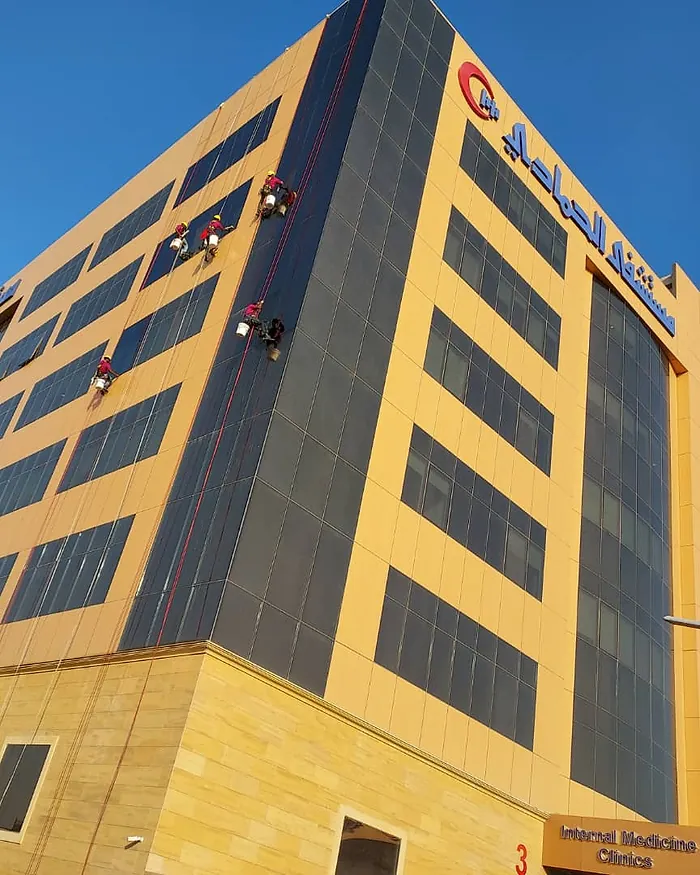
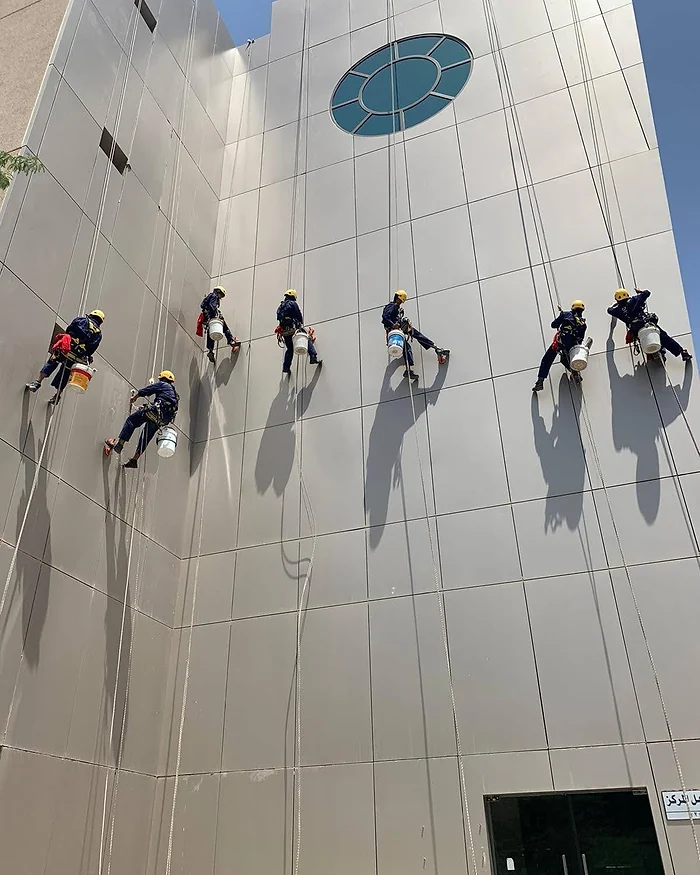
Photos from our team's work.
What is different about Eastern Province
The Eastern Province is the most humid part of the country. Dammam, Khobar, Dhahran and Jubail face the Gulf, where warm salt laden air and summer haze leave a sticky film on glass towers, corniche apartments and the cladding of Aramco and industrial housing, and refinery and petrochemical fallout at Jubail and Ras Tanura adds a fine grey grime. Al Ahsa is an oasis of palm groves, springs and older stone and mud quarters around Hofuf, while Hafr Al Batin inland is dry and swept by northern shamal dust. Metal fittings corrode and marble dulls quickly near the water.
Other services in Jubail
The room and the building around it are on one list.