
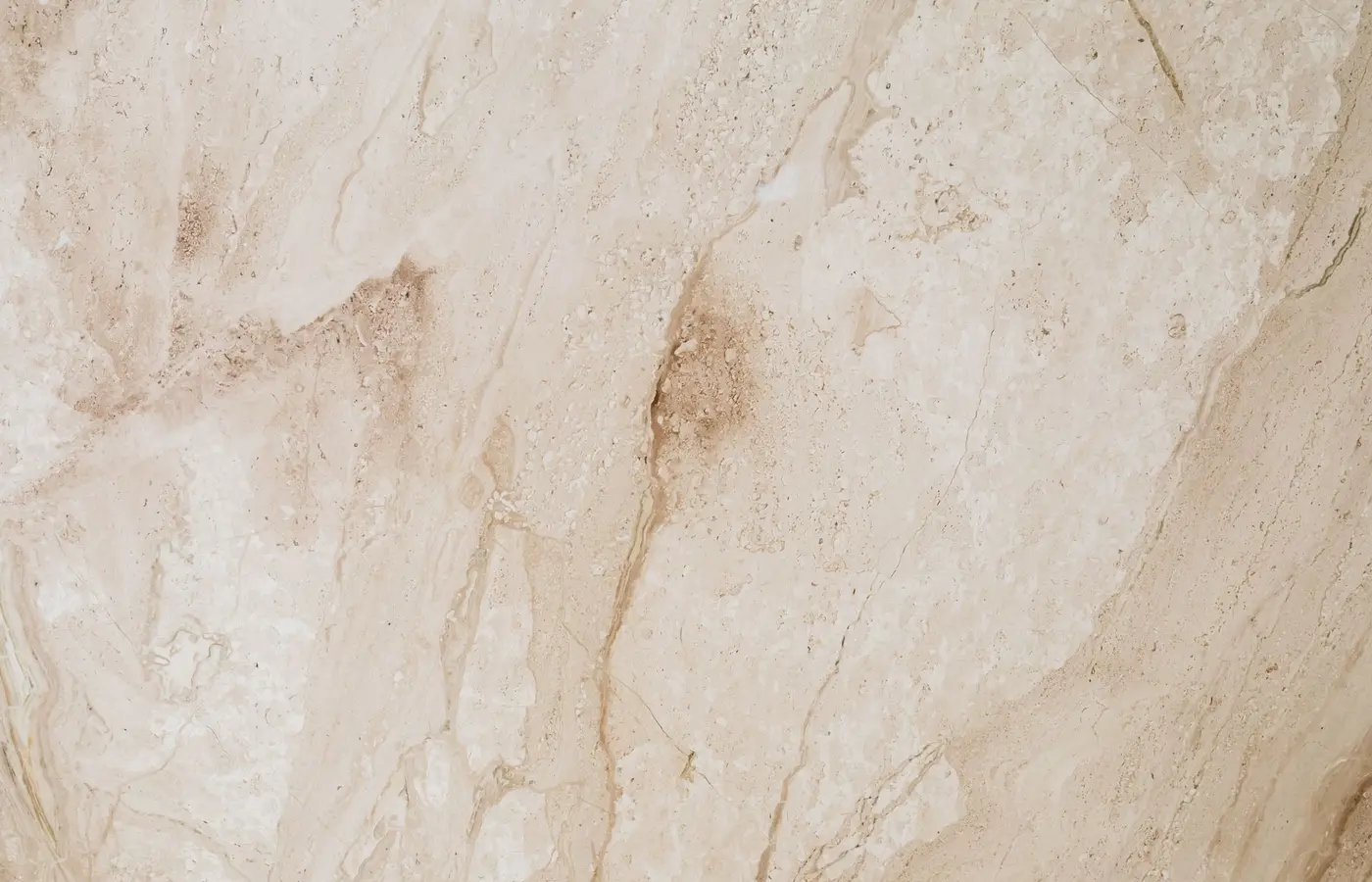
Why grinding beats a surface polish
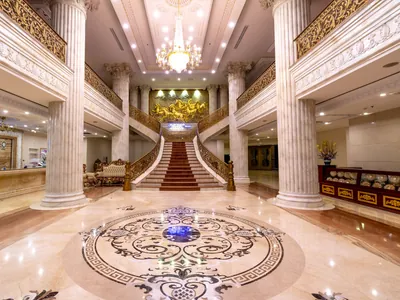
Real shine in marble comes from levelling the stone itself, not from a liquid polish laid on top that wears through at doorways within months. Over time, chair legs and fine dust cut shallow scratches that scatter the light, so the floor looks dead however clean it is. Grinding removes that scratched layer, and crystallisation builds a hard surface that stands up to daily wear.
-
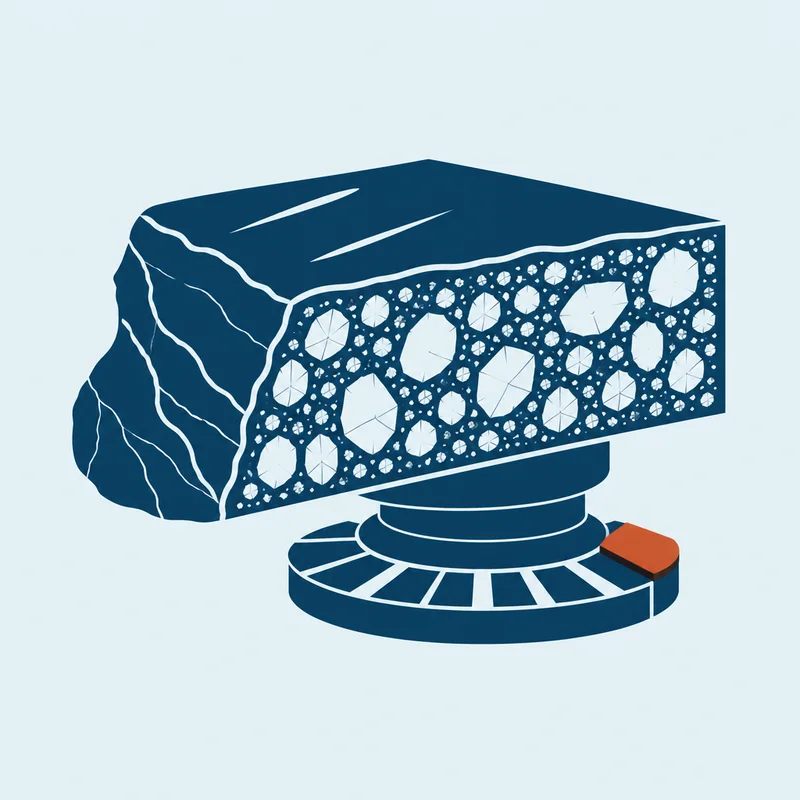
Shine from the stone, not a layer
A surface polish shines for the first week, then flakes off at the doors and busy walkways. Grinding works the marble itself, so the shine lasts because it has become part of the surface rather than something sitting on it.
-

Scratches removed, not hidden
Deep scratches and sunken stains do not wipe away, because they sit inside the stone. We start with a coarse pad that takes off the whole scratched layer, then step down through finer pads until the surface is level and unmarked.
-
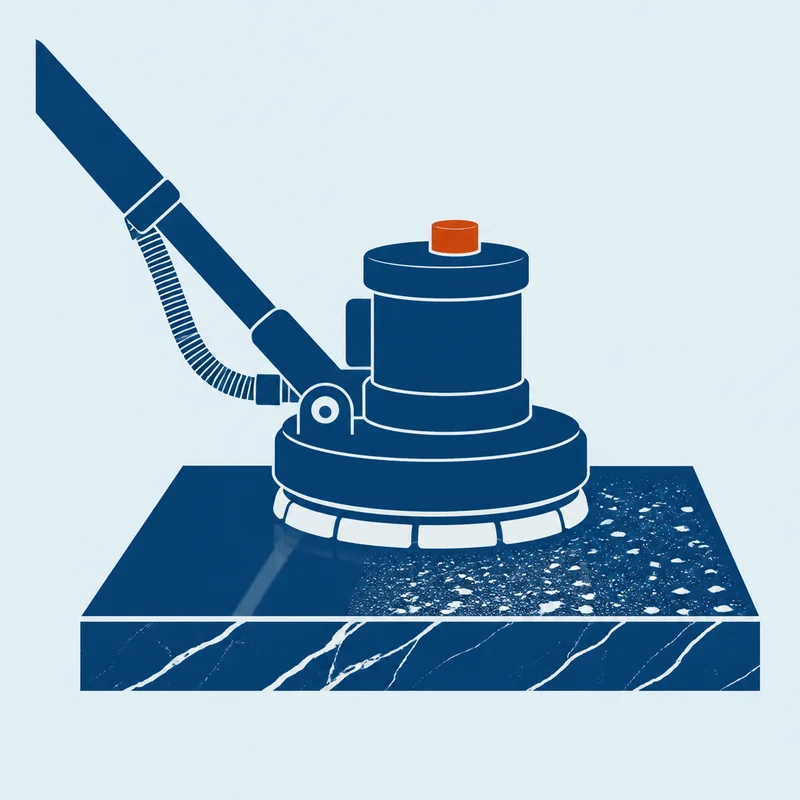
A surface that resists Riyadh dust
Central Saudi dust is fine, mineral and constant, and it grinds against a soft polish all day until the shine dulls. A crystallised surface is far harder, so it does not surrender to dust and footfall the way a coated one does.
-
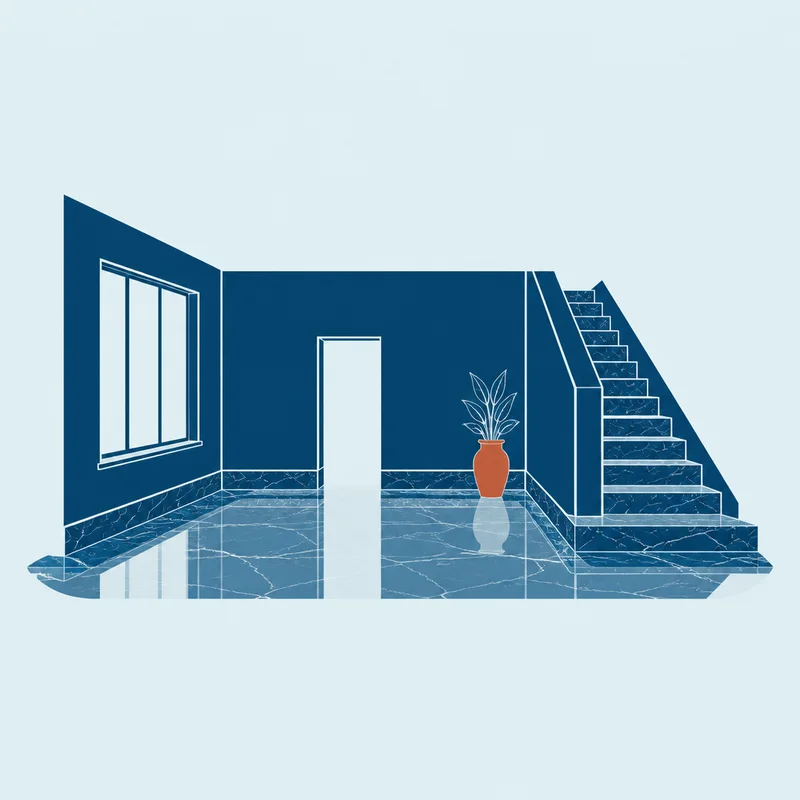
Edges and skirtings matched
Many floor jobs leave the corners and skirtings dull, so the edge of every room gives the work away. We reach the wall-tight edges with small machines and hand tools, so the shine is the same right across the floor.
What's Included
We move through every stage in order, from reading the condition of the stone to the final seal that protects it:
-
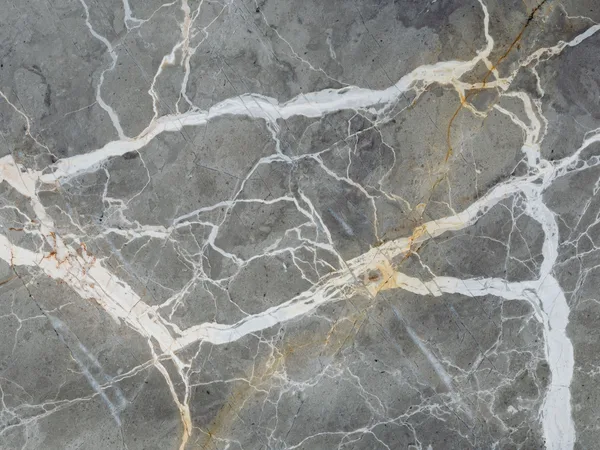
The stone type and its condition read
We check whether the floor is natural marble or terrazzo, how hard it is and how deep the scratches run, because that decides which pad we start with and how many stages are needed.
-
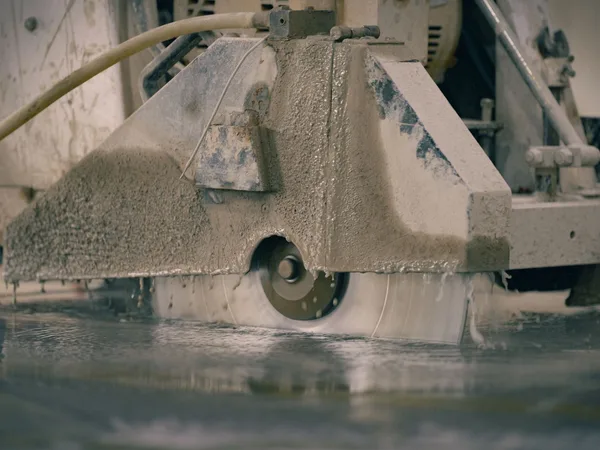
Coarse grinding to take out the scratches
We begin with coarse diamond pads that cut away the top layer with its scratches and waviness, until we reach a level, clean stone surface ready to be refined.
-
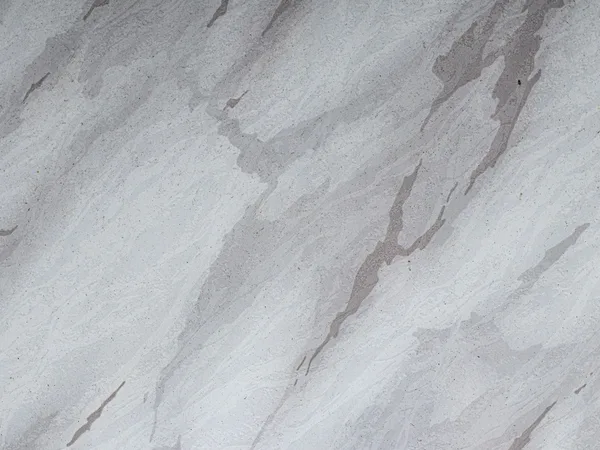
Stepped through to the fine pads
We step through finer pads one grade at a time, each pad erasing the marks left by the coarser one before it, until the stone is smooth enough to crystallise.
-
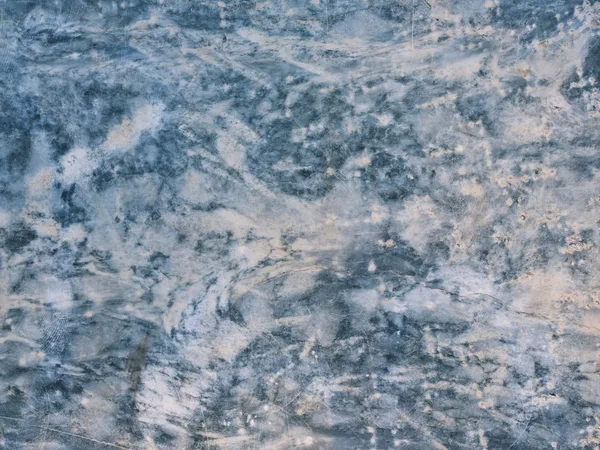
Crystallisation for a hard surface
We work the crystallising compound in with the machine's heat and friction, so it reacts with the stone and forms a hard, bright surface from the marble itself, not an added coat.
-
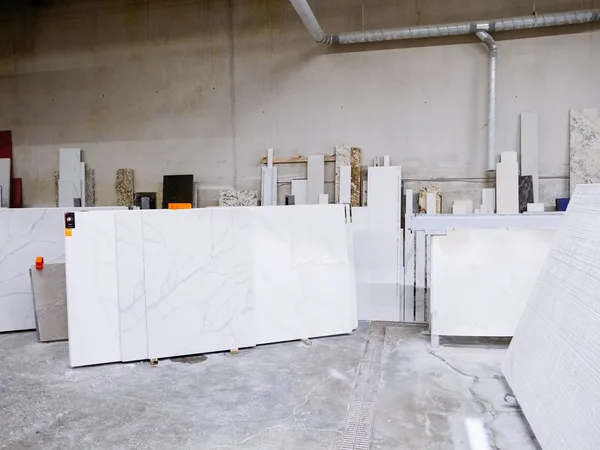
Edges and skirtings
We treat the corners, wall-tight edges and skirtings with small and hand-held tools, because the large machine cannot reach them, so the shine stays even everywhere.
-
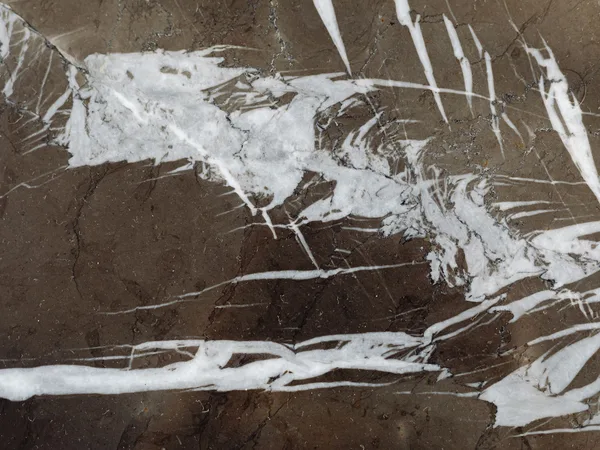
A final seal on the pores
We close the pores of the stone with a final protective seal that keeps dust and liquids from soaking in, so the floor cleans easily and the shine lasts longer before regrinding.
Some of our work
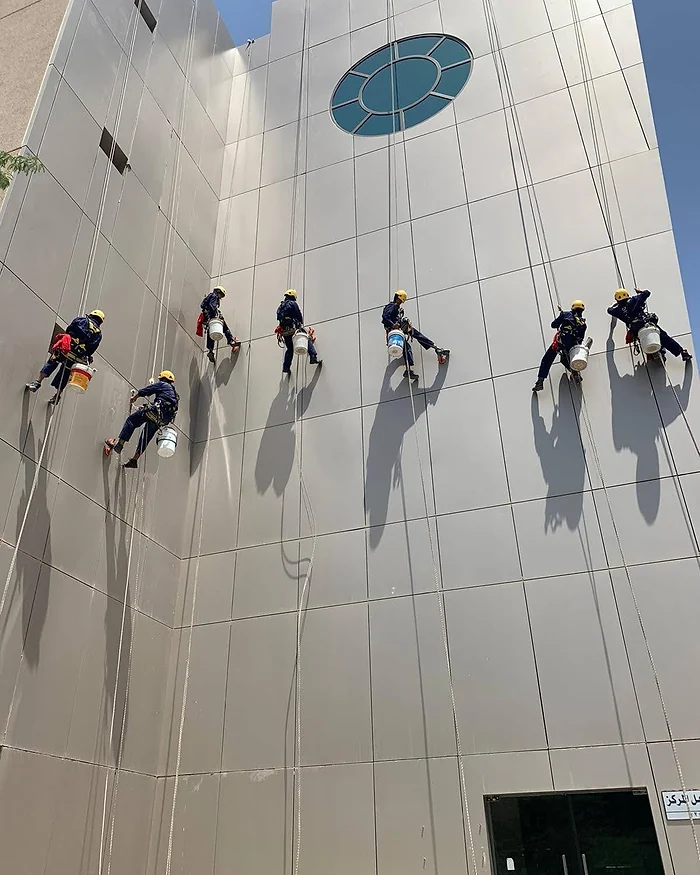
Photos from our team's work.





Related services
The room and the building around it are on one list.

Cities we cover
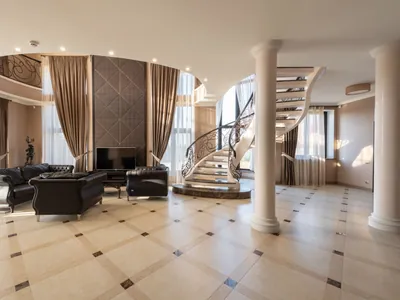
We bring grinding and crystallisation to the cities and regions listed below, serving homes, villas, offices and shops in every location we cover across the Kingdom.
The city pages for this service are being prepared and will appear here when they are published.